



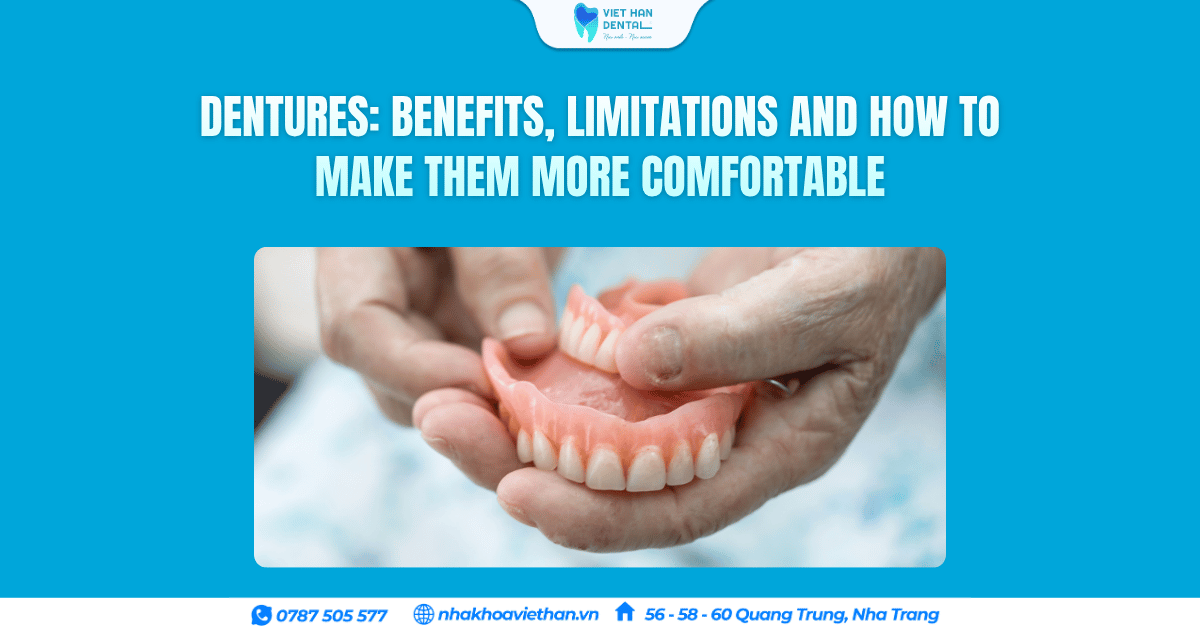
Losing several teeth — or an entire arch of teeth — can affect much more than your smile.
It may become more difficult to chew certain foods, pronounce words clearly, maintain facial support or feel confident when speaking and smiling.
For many patients, removable dentures remain a practical way to replace missing teeth. They can restore appearance and basic oral function without requiring the same surgical process as dental implants.
However, dentures also have limitations.
Understanding both the advantages and the challenges can help you make a more informed decision about whether conventional dentures, implant-supported dentures or another tooth-replacement option is right for you.
At Viet Han Dental Clinic in Nha Trang, treatment planning for missing teeth is based on the number of teeth lost, bone condition, remaining teeth, bite, general health and individual expectations.
What Are Dentures?
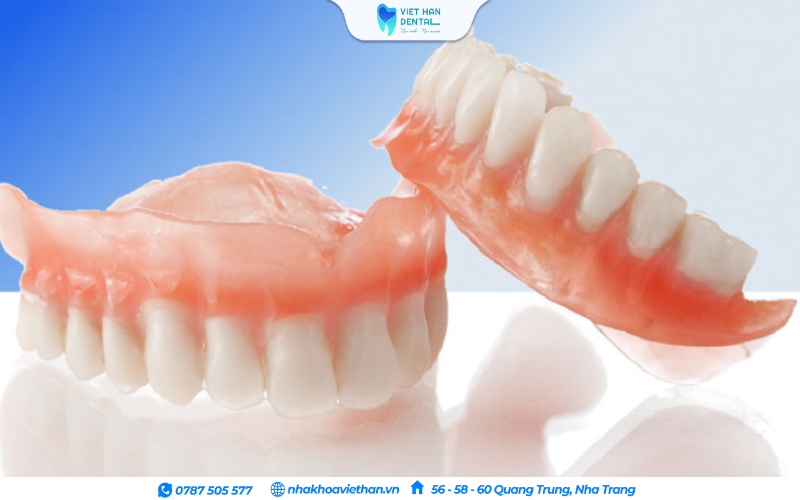
Dentures are removable dental prostheses designed to replace missing teeth and surrounding gum tissue.
They can be divided into two main categories.
Nội dung
- Complete Dentures
- Partial Dentures
- 1. They Can Replace Multiple Missing Teeth at Once
- 2. They Can Improve the Appearance of the Smile
- 3. They Can Improve Chewing Ability
- 4. Dentures Are Removable and Easy to Access for Cleaning
- 5. They Can Be Used in Many Different Tooth-Loss Situations
- 1. Dentures May Move During Eating or Speaking
- 2. The Mouth Changes Over Time
- 3. There Is an Adjustment Period
- Conventional Dentures
- Implant-Supported Solutions
Complete Dentures
Complete dentures are used when all teeth in the upper jaw, lower jaw or both arches are missing.
They rest on the gums and underlying jawbone.
Partial Dentures
Partial dentures are used when some natural teeth remain.
The appliance replaces missing teeth while using the remaining teeth and surrounding tissues for support and retention.
The exact design varies depending on the position of the missing teeth and the condition of the remaining dentition.
Why Do Patients Choose Dentures?
Dentures continue to be widely used because they can offer several practical advantages.
1. They Can Replace Multiple Missing Teeth at Once
When many teeth are missing, replacing each tooth individually may not always be necessary or financially practical.
A denture can restore several missing teeth or an entire dental arch within one prosthesis.
For some patients, this provides a relatively straightforward way to regain function and appearance.
2. They Can Improve the Appearance of the Smile
Modern dentures can be designed to look much more natural than many people expect.
The colour, shape, size and position of the artificial teeth can be selected to complement the patient’s:
- Facial proportions
- Smile line
- Lip support
- Age
- Existing natural teeth
- Aesthetic preferences
For patients who have lost many teeth, restoring adequate support to the lips and cheeks may also improve overall facial appearance.
3. They Can Improve Chewing Ability
Missing teeth can make eating difficult, particularly when several posterior teeth have been lost.
Dentures can restore a degree of chewing function and make a wider variety of foods easier to manage.
However, conventional removable dentures do not generally provide the same chewing efficiency or stability as natural teeth or fixed implant-supported restorations.
Patients often need a period of adaptation.
4. Dentures Are Removable and Easy to Access for Cleaning
Because removable dentures can be taken out of the mouth, all surfaces of the appliance can be cleaned directly.
This can make maintenance relatively straightforward once the patient has learned the correct technique.
The gums, tongue and remaining natural teeth must also continue to be cleaned carefully.
5. They Can Be Used in Many Different Tooth-Loss Situations
Dentures can be adapted to different clinical conditions.
They may be considered when:
- Several teeth are missing
- Most teeth have been lost
- All teeth in one arch are missing
- Surgery is not desired
- Implant treatment is not currently suitable
- A temporary tooth-replacement solution is required
In some cases, dentures can later be combined with dental implants to improve stability.
What Are the Main Limitations of Dentures?
Dentures can be very helpful, but they should not be expected to function exactly like natural teeth.
Patients should understand the potential challenges before treatment.
1. Dentures May Move During Eating or Speaking
Conventional dentures rely on the gums, underlying tissues and anatomy of the mouth for support.
The upper denture often achieves better suction because of the shape of the palate.
Lower dentures can be more difficult to stabilise because the tongue and floor of the mouth are constantly moving.
Patients may therefore notice:
- Slight movement while chewing
- Reduced confidence when eating hard foods
- Food entering underneath the denture
- The need for periodic adjustment
A well-made denture should fit as securely as possible, but some movement can still occur.
2. The Mouth Changes Over Time
The shape of the jawbone does not remain exactly the same after teeth are lost.
Over time, the bone in areas without teeth may gradually reduce in volume.
This can change the relationship between the denture and the gums.
A denture that initially fitted well may eventually become:
- Loose
- Unstable
- Uncomfortable
- Less effective during chewing
This does not necessarily mean the denture was made incorrectly.
It may simply mean the oral tissues have changed.
3. There Is an Adjustment Period
Wearing a new denture can feel unfamiliar.
During the first days or weeks, patients may notice:
- Increased saliva
- A bulky sensation
- Mild pressure on the gums
- Difficulty controlling the denture
- Changes in speech
- Difficulty eating certain foods
Most patients adapt progressively as the muscles of the mouth learn to work with the new appliance.
Follow-up adjustments are often an important part of this process.
Speaking With New Dentures
Some sounds can initially be more difficult to pronounce after receiving a new denture.
This may be especially noticeable with sounds that require precise contact between the tongue, teeth and palate.
One useful way to adapt is to:
- Read aloud at home
- Speak slowly at first
- Repeat difficult words
- Practise regularly
Speech usually improves as the tongue and facial muscles become accustomed to the new tooth positions.
If difficulties persist, the denture may need to be reassessed.
Eating With Dentures
Eating with dentures is different from eating with natural teeth, particularly at the beginning.
For the first several days, start with foods that are easy to chew, such as:
- Eggs
- Soft fish
- Cooked vegetables
- Soft rice
- Pasta
- Tofu
- Minced meat
- Soft fruits
Cut food into smaller pieces and try to chew evenly on both sides.
As you gain confidence, gradually introduce firmer foods.
Very sticky or hard foods may remain difficult for some denture wearers.
Gum Soreness and Pressure Points
A new denture contacts the soft tissues of the mouth.
Small areas of excessive pressure may sometimes develop during the adaptation period.
This can cause:
- Soreness
- Red spots
- Small ulcers
- Pain while chewing
Do not repeatedly tolerate painful areas hoping they will disappear.
The dentist can identify pressure points and adjust the denture to improve comfort.
Avoid attempting to grind or reshape the appliance yourself.
Why Do Dentures Become Loose?
Several factors can cause a denture to feel less secure.
These include:
- Changes in jawbone shape
- Gum changes
- Weight changes
- Wear of the denture teeth
- Changes in the bite
- Damage to the denture base
When a denture becomes loose, the solution depends on its condition.
The dentist may recommend:
- Adjustment
- Relining
- Rebasing
- Repair
- Replacement with a new denture
- Implant support
What Is a Denture Reline?
A denture reline modifies the inner surface of an existing denture so that it adapts more closely to the current shape of the gums.
This may improve:
- Fit
- Stability
- Comfort
- Retention
Relining can be useful when the denture itself remains in good condition but the supporting tissues have changed.
A severely worn, damaged or poorly designed denture may require replacement instead.
Can Denture Adhesive Help?
Denture adhesive can sometimes improve the feeling of stability in a properly fitting denture.
However, it should not be used as a permanent solution for a denture that has become significantly loose.
If you constantly require a large amount of adhesive to keep the denture in place, the fit should be checked professionally.
Excessive reliance on adhesive may mask a problem that requires adjustment or relining.
Dentures and Jawbone Changes
Natural tooth roots transmit forces to the surrounding jawbone.
After teeth are lost, this stimulation decreases and the bone in that area may gradually remodel and reduce in volume.
A conventional removable denture rests on top of the gum and does not replace the biological function of natural tooth roots.
This is one reason denture fit can change over time.
Dental implants may help provide additional stimulation to the surrounding bone in the areas where they are placed, while also providing anchorage for a prosthesis.
What Are Implant-Supported Dentures?
For patients who struggle with loose conventional dentures, dental implants may be used to improve stability.
An implant-supported or implant-retained denture connects to implants placed in the jawbone.
Depending on the treatment design, the prosthesis may be removable by the patient or fixed in place.
The implants provide additional anchorage, which may improve:
- Stability
- Chewing confidence
- Comfort
- Retention
- Speech
- Overall function
The number and position of implants required depends on the individual case.
Conventional Dentures vs. Implant-Supported Dentures
The two options have different advantages.
Conventional Dentures
May be appropriate for patients who:
- Prefer a non-surgical solution
- Have financial limitations
- Need a relatively simple tooth-replacement option
- Are not currently suitable candidates for implant surgery
Potential limitations include reduced stability and progressive changes in fit.
Implant-Supported Solutions
May be considered for patients who want:
- Greater stability
- Better chewing efficiency
- Reduced denture movement
- More confidence during speaking
- A more fixed-feeling restoration
Implant treatment requires suitable bone, medical assessment and a surgical procedure.
A comprehensive examination is necessary before deciding which option is most appropriate.
How Should Dentures Be Cleaned?
Daily cleaning is essential because plaque, food debris and microorganisms can accumulate on denture surfaces.
After meals, rinse the denture when practical.
For daily cleaning:
- Remove the denture carefully.
- Rinse away loose food particles.
- Brush all surfaces gently using a denture brush or soft brush.
- Use a denture-cleaning product recommended by your dentist.
- Rinse thoroughly before placing the denture back in the mouth.
Avoid using abrasive household cleaners.
Some regular toothpastes can also be too abrasive for certain denture materials.
Clean Your Mouth Even If You Have No Natural Teeth
Removing your natural teeth does not eliminate the need for oral hygiene.
The gums, tongue and palate should still be cleaned regularly.
Use a soft toothbrush or appropriate cleaning method to remove plaque and stimulate the tissues gently.
Patients with partial dentures must pay particularly close attention to their remaining natural teeth, because those teeth help support the prosthesis and need to remain healthy.
Should You Sleep With Dentures?
In many cases, patients are advised to remove removable dentures while sleeping.
This gives the supporting tissues time to rest and makes it easier to maintain denture and oral hygiene.
However, post-operative instructions can differ in specific situations, such as immediately after tooth extraction.
Follow the instructions provided by your dentist.
How Long Do Dentures Last?
Dentures are not expected to last forever.
Their lifespan depends on:
- Oral changes
- Wear of the artificial teeth
- Material quality
- Bite forces
- Cleaning habits
- Handling
- Bone and gum changes
Even if the denture still looks acceptable, the fit and bite may change gradually.
Regular dental examinations help determine whether adjustment, relining or replacement is required.
Common Signs Your Denture Needs to Be Checked
Arrange a dental examination if you notice:
- Increasing looseness
- Frequent slipping
- Gum soreness
- Recurrent ulcers
- Difficulty chewing
- Changes in speech
- Cracks in the denture
- Broken artificial teeth
- Changes in your bite
- Persistent bad breath despite cleaning
- Difficulty keeping the denture stable
A denture should not repeatedly cause pain.
Are Dentures the Best Option for Everyone?
There is no single tooth-replacement method that is best for every patient.
Treatment depends on factors such as:
- Number of missing teeth
- Position of missing teeth
- Condition of remaining teeth
- Bone volume
- Gum health
- General health
- Expectations
- Lifestyle
- Budget
- Willingness to undergo surgery
Possible solutions may include:
- Partial removable dentures
- Complete dentures
- Dental bridges
- Single or multiple implants
- Implant-supported overdentures
- Full-arch Implant restorations such as All-on-4 or All-on-6
The best option is the one that provides an appropriate balance between function, health, comfort and long-term maintenance for the individual patient.
Denture and Missing-Teeth Consultation at Viet Han Dental Clinic
At Viet Han Dental Clinic in Nha Trang, patients with missing teeth are assessed individually before any treatment is recommended.
The examination may include evaluation of:
- Remaining teeth
- Gum condition
- Jawbone volume
- Bite
- Existing dentures
- Facial support
- Chewing function
- Medical history
When necessary, 3D Cone Beam CT imaging can also help assess bone anatomy when implant-supported treatment is being considered.
Our dentists can then discuss the advantages and limitations of each available treatment option so that you can make an informed decision.
A Comfortable Denture Starts With the Right Treatment Plan
Dentures can be a practical and effective way to restore missing teeth, but success depends on more than simply making a set of artificial teeth.
Good results require:
- Accurate examination
- Appropriate denture design
- Correct bite
- Good fit
- Follow-up adjustments
- Daily hygiene
- Regular dental reviews
If a conventional denture no longer feels stable enough, additional options such as relining or implant support may also be considered.
If you have lost multiple teeth, currently wear loose dentures or would like to explore a more stable tooth-replacement solution, contact Viet Han Dental Clinic for an individual assessment.
Viet Han Dental Clinic – Nha Trang
56–58–60 Quang Trung, Nha Trang, Vietnam
Hotline / WhatsApp: +84 787 505 577
Website: nhakhoaviethan.vn