



The teething process is one of the most notable developmental milestones in a child’s early years. It not only affects chewing and pronunciation abilities, but the emergence of each tooth also partly reflects the child’s physical growth rate.
Understanding the correct teething sequence helps parents proactively monitor their child’s oral development, recognize early abnormal signs such as delayed eruption, incorrect eruption order, or prolonged tooth replacement to take appropriate corrective action. To understand each stage of a child’s teething and know when to take your child for a check-up, let’s explore the detailed teething sequence with Nha khoa Việt Hàn (Viet Han Dental Clinic) in the article below.
Nội dung
- 1. When do babies usually start teething?
- 2. Signs that a baby is about to teeth
- 3. The sequence of baby teeth eruption by stage
- 4. What is the role of baby teeth?
- 5. When do children start losing their baby teeth?
- 6. Is it abnormal if a baby’s permanent teeth take a long time to erupt?
- 7. How to take care of oral health during the teething and tooth-replacement stages
- 8. Pediatric dental services at Nha khoa Việt Hàn
- Viet Han Dental Clinic
1. When do babies usually start teething?
Typically, the first teeth appear when a child is around 6 months old. However, this is only a reference milestone because every baby develops at a different pace. Some babies may start teething as early as 3–4 months old, while others may not get their first tooth until around 10–12 months. Factors influencing the timing of teething include:
Genetics
Diet
Absorption of calcium and vitamin D
The child’s overall physical condition and growth rate
If a baby teeth earlier or later than the average timeframe while still developing normally, parents do not need to worry too much.
2. Signs that a baby is about to teeth
Not all babies show the exact same symptoms when entering the teething stage. However, parents can recognize it through several common signs:
Drooling more than usual: The salivary glands become very active, causing the baby to drool frequently.
Biting or putting objects into the mouth: Due to itchy and uncomfortable gums, children tend to chew on toys or bite their fingers.
Slightly swollen and sensitive gums: Observing the gum area may reveal mild redness or small white spots—the positions where teeth are about to erupt.
Crying and sleeping restlessly: The discomfort in the gums makes some babies more irritable than usual.
During this stage, parents can clean their hands and gently massage the gums or let the baby use age-appropriate specialized teething toys.
3. The sequence of baby teeth eruption by stage
Baby teeth usually erupt in a relatively stable sequence in most young children. Following the correct teething sequence helps parents easily assess the baby’s oral development and detect early abnormalities regarding bite or tooth alignment.
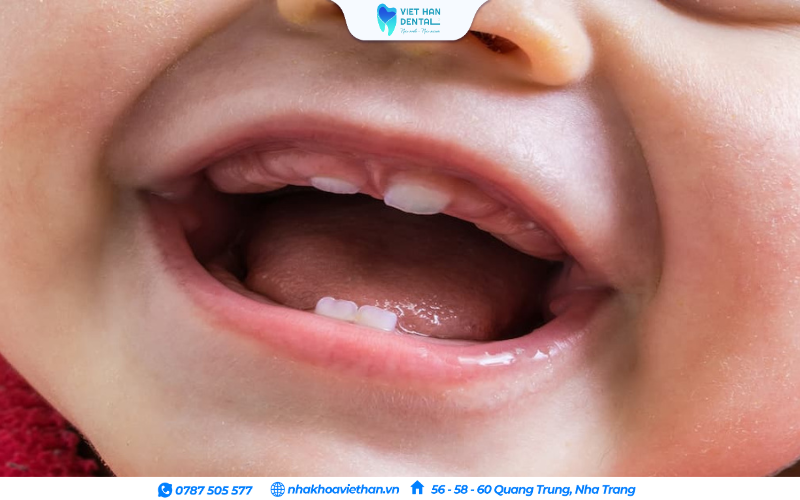
3.1. 6 – 10 months: Lower central incisors These are usually the first teeth to appear. Many babies will start showing signs of drooling, biting objects, or mild discomfort during this stage.
3.2. 8 – 12 months: Upper central incisors After the lower incisors erupt, the upper central incisors appear sequentially, helping the baby begin to master the function of biting food.
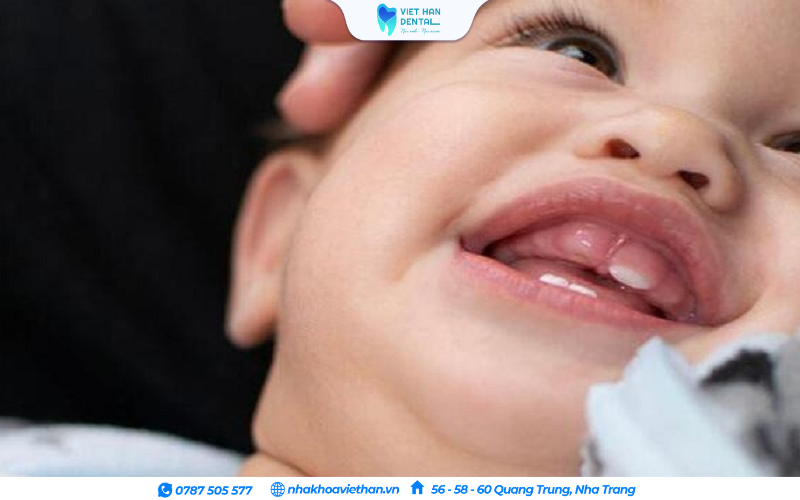
3.3. 9 – 16 months: Lateral incisors The teeth adjacent to the central incisors continue to erupt, contributing to completing the front dental region and supporting better pronunciation.
3.4. 13 – 19 months: First primary molars This group of teeth plays an important role in grinding and chewing food, helping the child gradually transition to a more diverse diet.
3.5. 16 – 23 months: Canines Canines usually erupt after the first group of molars. Some children may experience more discomfort due to the eruption position and characteristics of these teeth.
3.6. 23 – 33 months: Second primary molars These are the final primary teeth to erupt. Upon completing this stage, children typically have a full set of 20 baby teeth, creating a foundation for chewing and future permanent tooth development.
Note that a child’s teething timeline may vary slightly and does not always match the standard milestones entirely.
4. What is the role of baby teeth?
Many parents think baby teeth will eventually be replaced, so they do not need meticulous care. In reality, this is a misconception. Even though they only exist during early childhood, baby teeth play a vital role in a child’s comprehensive development:
Help children chew efficiently, thereby absorbing nutrients better for physical growth.
Support clear pronunciation, shaping communication and language skills.
Maintain space and guide permanent teeth to erupt in the correct positions.
Contribute to the balanced development of jawbone structure and facial features.
If baby teeth suffer from severe decay, are lost prematurely, or are improperly cared for, children may face risks of permanent teeth erupting crooked, crowded, misaligned, and suffering impaired chewing functions later on. Therefore, taking care of baby teeth early on is a crucial step to build the foundation for a healthy long-term smile.

5. When do children start losing their baby teeth?
Typically, children begin entering the tooth-replacement stage around 6 years of age. This is the process where baby teeth gradually fall out to make room for permanent teeth to develop. However, the timing of tooth replacement can vary slightly among children and is still considered normal. The replacement process generally follows an order relatively similar to the baby teeth eruption sequence:
6–8 years: Replacing the incisors (front teeth)
9–12 years: Replacing canines and premolars
11–13 years: Replacing the remaining molars
Late teens – early adulthood: Wisdom teeth may begin to erupt (not everyone has them)
After completing the tooth-replacement process, an adult typically has up to 32 permanent teeth, including wisdom teeth if fully erupted. During this stage, parents should monitor their child’s oral development to detect conditions such as delayed shedding of baby teeth, crooked teeth, overcrowding, or malocclusions early, ensuring timely intervention.
6. Is it abnormal if a baby’s permanent teeth take a long time to erupt?
After a baby tooth falls out, the permanent tooth does not emerge immediately; it needs some time to continue developing and pushing up through the gums. Therefore, having a gap after a tooth falls out is quite common. Generally:
Permanent teeth may appear within a few weeks to several months after a baby tooth falls out.
Some children experience delayed eruption due to genetics, individual growth rates, or a lack of space for the teeth to emerge.
However, parents should take their child for a dental check-up if they encounter the following signs:
A baby tooth fell out more than 6–12 months ago, but no permanent tooth is seen erupting yet.
Newly erupted teeth are crooked, crowded, or clearly out of position.
There are signs of pain, swollen gums, or prolonged inflammation.
A permanent tooth is seen erupting while the baby tooth has not fallen out completely (“double-row” teeth).
Early examination helps determine the cause and provides timely intervention if there is a lack of tooth buds, impacted teeth, or abnormal eruption paths of permanent teeth.
7. How to take care of oral health during the teething and tooth-replacement stages
To help children maintain healthy teeth, parents should maintain the following habits:
Clean gums before teeth appear: Use soft gauze or a clean towel to wipe the baby’s gums after feeding to limit bacterial accumulation.
Brush teeth regularly twice a day: Choose age-appropriate toothbrushes and toothpaste to clean effectively while protecting tooth enamel.
Limit sweets and sugary drinks: Reduce the risk of tooth decay, especially when new teeth are erupting or being replaced.
Do not let children sleep with a milk bottle: This habit can increase the risk of early childhood caries and affect oral development.
Regular dental check-ups: Frequent monitoring helps detect issues like misalignment, delayed tooth replacement, or jawbone anomalies early for timely intervention.
Proper care during this stage not only helps children achieve straight, beautiful teeth but also builds a solid foundation for future oral health.
8. Pediatric dental services at Nha khoa Việt Hàn
The teething sequence in children is not only a natural developmental milestone but also reflects the growth of teeth, dental arches, and future chewing functions. Monitoring the teething process early helps parents promptly detect issues such as delayed eruption, crooked teeth, overcrowding, or malocclusions. In Nha Trang, Nha khoa Việt Hàn provides pediatric oral healthcare and monitoring services tailored to each stage of development.

8.1. Examination and monitoring of the child’s teething process: Dentists inspect actual tooth eruption statuses, evaluate the appearance sequence of baby and permanent teeth, and assess jaw arch development across different ages. Periodic monitoring helps detect early abnormal signs like delayed eruption, mispositioned teeth, or insufficient spacing for proper alignment.
8.2. Evaluation of risks for crooked teeth and malocclusions: During the tooth-replacement phase, children may experience crowding or abnormal eruption directions if there is insufficient space in the dental arch. Through examinations and evaluations of tooth-jaw structures, dentists advise appropriate monitoring or intervention paths to support smooth tooth development.
8.3. Guidance on age-appropriate oral hygiene: Parents receive customized advice on oral hygiene tailored to each developmental phase, from the onset of primary teeth to the tooth-replacement stage. Guidance includes brushing techniques, toothbrush selection, dietary habits, and harmful habits to limit to support healthy tooth development.
8.4. Monitoring tooth replacement and jaw development: Alongside checking the teething sequence, dentists monitor jaw arch development and chewing capabilities across various stages. This enables early detection of risks involving crowded teeth, misaligned bites, or issues that could impact future orthodontic treatment.
Every erupted tooth represents a vital milestone in a child’s growth journey. Understanding the correct teething sequence empowers parents to proactively care, spot abnormal signs early, and support their children in building a lifelong healthy dental foundation. Consistent tracking combined with routine dental check-ups serves as a simple yet powerful way to accompany your child through every single developmental stage.
Viet Han Dental Clinic
Team of Doctors 100% graduated from Ho Chi Minh City/Hue/Hanoi University of Medicine and Pharmacy
Address: 56-58-60 Quang Trung, Nha Trang, Khanh Hoa, Viet Nam
Hotline/ Whatsapp: 0787 505 577
Make an appointment: https://nhakhoaviethan.vn/en/contact/
Youtube: Viet Han Dental