



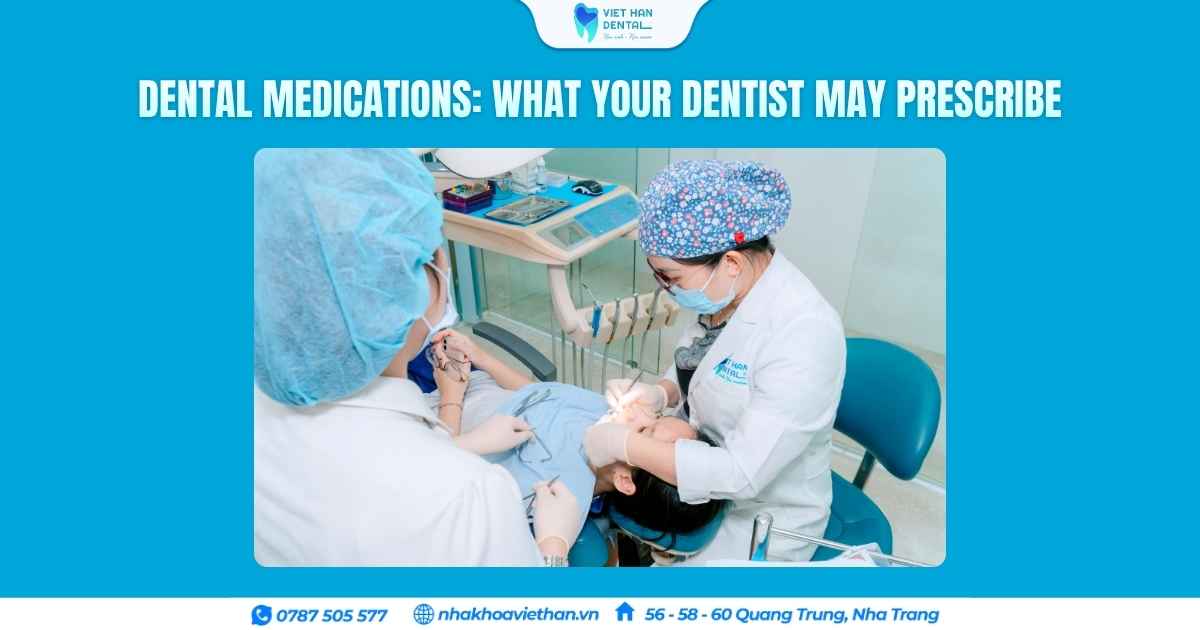
Dental treatment sometimes requires medication to relieve discomfort, manage infection or support recovery. However, not every dental condition needs a prescription, and medication should always be selected according to your individual health and clinical needs.
At Viet Han Dental Clinic in Nha Trang, our dentists review relevant medical history and current medications before recommending treatment or prescribing medicines when necessary.
Nội dung
1. Pain Relief Medication
Pain relievers may be recommended after tooth extraction, dental implant surgery or other procedures, as well as for certain painful dental conditions.
Common options include paracetamol (acetaminophen) and nonsteroidal anti-inflammatory drugs (NSAIDs), such as ibuprofen, when appropriate.
The choice depends on factors including your medical history, allergies, other medications and the type of treatment. Always follow the prescribed instructions or product label, and do not exceed the recommended dose.
2. Antibiotics
Antibiotics may be prescribed for selected dental infections or certain surgical situations when clinically indicated.
However, antibiotics are not necessary for every toothache, cavity, extraction or implant procedure.
Many dental infections require treatment of the underlying cause, such as drainage, root canal treatment or extraction. Antibiotics alone cannot reliably eliminate the source of an infected tooth.
Never take leftover antibiotics or use medication prescribed for someone else.

3. Local Anaesthetics
Local anaesthesia is commonly used to reduce pain during dental procedures such as fillings, root canal treatment, extractions and implant surgery.
The dentist selects the appropriate anaesthetic and technique based on the procedure and your medical history.
Be sure to inform your dentist about previous reactions to anaesthesia, relevant medical conditions and any medications you are taking.
4. Medicated Mouth Rinses
In certain situations, a dentist may recommend a medicated mouth rinse to help manage plaque, gum inflammation or post-operative oral hygiene.
For example, chlorhexidine may be prescribed for short-term use when appropriate.
These products should be used only as directed, as prolonged or unnecessary use can cause side effects such as staining, taste changes or oral irritation.
5. Prescription Fluoride Products
Patients with a higher risk of tooth decay may benefit from professional fluoride treatment or prescription-strength fluoride toothpaste.
These products can help strengthen enamel and support remineralisation of early areas of mineral loss.
Your dentist may consider them for patients with recurrent cavities, dry mouth, exposed root surfaces or other individual risk factors.
6. Medication for Dry Mouth or Oral Infections
Persistent dry mouth may require additional care because reduced saliva can increase the risk of cavities and oral discomfort.
Depending on the cause, your dentist or physician may recommend saliva substitutes, specific oral-care products or other appropriate treatment.
Certain oral infections, such as oral thrush, may require antifungal medication after professional diagnosis.
Why Your Medical History Matters
Before taking dental medication, tell your dentist about:
- Current prescription and over-the-counter medicines
- Vitamins and supplements
- Known allergies
- Previous reactions to medication or anaesthesia
- Pregnancy or breastfeeding, when relevant
- Medical conditions affecting the liver, kidneys, heart or blood clotting
- Diabetes and other conditions that may influence healing
Do not stop or change prescribed medication without advice from the appropriate healthcare professional.
Medication Is Only One Part of Dental Treatment
Medication can help manage symptoms and support recovery, but it does not replace necessary dental procedures.
For example, a severely decayed tooth may require a filling, root canal treatment or extraction to address the underlying problem.
A proper dental examination helps determine whether medication is needed and which treatment will provide the most appropriate long-term solution.
Dental Care at Viet Han Dental Clinic
At Viet Han Dental Clinic, our dentists assess each patient’s oral condition and relevant medical history before recommending treatment.
When medication is necessary, patients receive instructions regarding its purpose, use and important precautions.
If you have questions about a dental prescription, tooth pain or recovery after treatment, contact our team for professional advice.
Viet Han Dental Clinic – Nha Trang
56–58–60 Quang Trung, Nha Trang, Vietnam
Hotline / WhatsApp: +84 787 505 577
Website: nhakhoaviethan.vn