



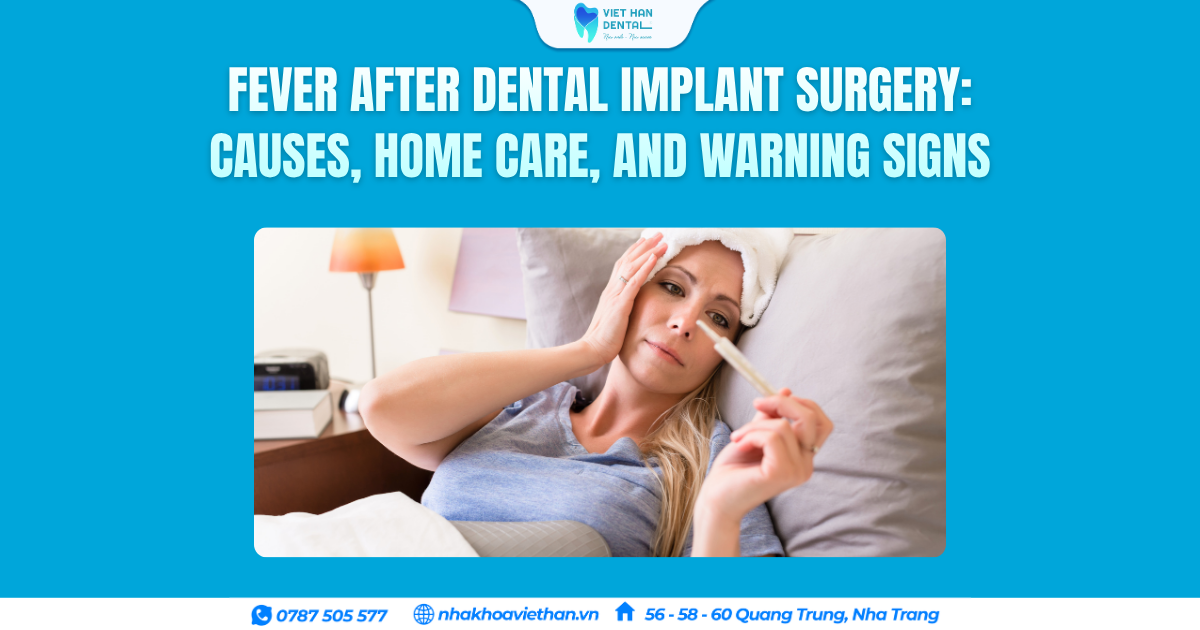
After dental implant surgery, the body needs time to adapt to the implant and repair the tissues affected during the procedure. During this period, some patients may experience a mild fever, fatigue, or general discomfort within the first 24–48 hours. These are often normal physiological responses.
However, a persistent fever or one accompanied by other unusual symptoms should be closely monitored and treated promptly. This article from Viet Han Dental Clinic explains the causes of fever after dental implant surgery, safe ways to manage it at home, and the warning signs that require immediate dental attention.
Nội dung
- 1. Is Fever After Dental Implant Surgery a Cause for Concern?
- 2. Warning Signs That Require Attention
- 3. Why Is Early Fever Control Important?
- 4. How to Manage Fever at Home After Dental Implant Surgery
- 5. Potentially Serious Causes of Fever After Implant Surgery
- 6. Common Mistakes When Managing Fever at Home
- 7. Viet Han Dental Clinic – A Trusted Destination for Dental Implant Treatment in Nha Trang
- Viet Han Dental Clinic
1. Is Fever After Dental Implant Surgery a Cause for Concern?
After implant surgery, the body activates its immune response to protect the surgical site and support healing. Therefore, a mild fever ranging from 37.5°C to approximately 38°C during the first one or two days is usually not a cause for concern.
In addition to the body’s natural inflammatory response, a mild fever may occur because of:
- Soft-tissue trauma during surgery.
- Additional procedures such as bone grafting or sinus lifting.
- A sensitive constitution or weakened immune system.
- Pre-existing oral conditions that were not fully controlled before surgery.
In most cases, the fever gradually subsides as the body recovers. However, if it persists or is accompanied by unusual symptoms, the patient should seek professional evaluation promptly.
2. Warning Signs That Require Attention
Mild swelling, tenderness, and discomfort during the first few days after implant surgery are generally expected. However, if these symptoms do not improve or become progressively worse, contact your dentist for a timely examination.
Do not ignore the following warning signs:
- A fever above 38.5°C lasting longer than 48–72 hours.
- Pain that becomes increasingly severe instead of gradually improving.
- Significant facial swelling, warmth, redness, or difficulty opening the mouth.
- Heavy or persistent bleeding.
- Pus or foul-smelling discharge from the implant site.
- Difficulty swallowing or breathing.
- Unusual weakness or severe fatigue.
- A sensation that the implant is loose or unstable when touched or during chewing.
These symptoms may indicate infection or another postoperative complication that requires prompt treatment to protect the implant and surrounding tissues.
3. Why Is Early Fever Control Important?
Some patients assume that fever is a normal reaction and does not require attention. However, when body temperature rises above 38.5°C, it may result in:
- Dehydration and electrolyte imbalance, which can cause the body to weaken more quickly.
- An increased heart rate, prolonged fatigue, and discomfort.
- Poorer sleep quality, affecting overall recovery.
- Possible disruption to tissue healing and osseointegration following implant placement.
Managing body temperature appropriately not only helps the patient feel more comfortable but also supports a more favourable recovery after dental implant surgery.
4. How to Manage Fever at Home After Dental Implant Surgery
The following measures may help reduce discomfort and support recovery at home.
4.1 Apply a Cold Compress During the First 24 Hours
During the first day after surgery, a cold compress can help reduce swelling, limit inflammation, and provide comfort.
Wrap ice in a soft towel or use a specialized cold pack. Apply it gently to the outside of the cheek near the implant site for approximately 10–15 minutes at a time.
Do not place ice directly on the skin, as this may cause a cold burn or irritate the soft tissues.

4.2 Apply a Warm Compress After 24 Hours
After the initial inflammatory stage has passed, a warm compress may help improve circulation, reduce residual swelling, and support tissue recovery.
Use a comfortably warm towel and apply it for approximately 10 minutes at a time. Avoid excessively hot water, as it may cause discomfort or adversely affect the treatment area.
4.3 Take Medication Exactly as Prescribed
After implant surgery, the dentist may prescribe pain relievers, anti-inflammatory medication, antibiotics, or fever-reducing medication based on the patient’s condition.
Patients should:
- Take each medication at the prescribed dose and time.
- Never increase the dosage or stop medication without consulting the dentist.
- Avoid combining different medications unless specifically instructed by a healthcare professional.
Correct medication use helps manage symptoms while minimizing unwanted side effects.

4.4 Stay Properly Hydrated
A fever can cause the body to lose more fluid than usual. Adequate hydration helps regulate body temperature, supports normal metabolism, and promotes recovery.
Suitable options may include:
- Water.
- Oral electrolyte solutions.
- Low-acid fruit juice.
- Milk or other appropriate nutritional drinks.
Take small sips regularly throughout the day to support better absorption and reduce discomfort.
4.5 Maintain an Appropriate Diet
During recovery, suitable food choices help support overall health while minimizing pressure on the surgical site.
Choose soft, easy-to-swallow foods such as porridge, soup, milk, smoothies, and foods rich in protein and vitamins.
Avoid foods that are excessively hot, spicy, hard, or require heavy chewing, as they may irritate the surgical area and interfere with healing.

4.6 Get Adequate Rest
Proper rest allows the body to focus its energy on healing and managing the postoperative inflammatory response.
Getting enough sleep, avoiding strenuous physical activity, and limiting stress during the first few days after implant placement may help the body regulate its temperature and recover more effectively.
4.7 Wear Light, Breathable Clothing
Some people believe that covering themselves with thick blankets to induce sweating will reduce a fever more quickly. In fact, this can prevent the body from releasing heat and may cause the temperature to rise further.
Wear light, breathable clothing and keep the room comfortably ventilated.
5. Potentially Serious Causes of Fever After Implant Surgery
A mild fever during the first few days after dental implant surgery is often part of the body’s natural healing response. However, a persistent or high fever accompanied by unusual symptoms may indicate a problem requiring early examination and treatment.
5.1 Infection at the Surgical Site
Infection is one of the most concerning causes of a high fever after dental implant surgery. When bacteria enter the surgical site, the patient may experience:
- Pain that gradually becomes more severe.
- Warmth and swelling around the cheek or gums near the implant.
- Fluid or pus draining from the surgical site.
- Persistent unpleasant breath.
Without timely treatment, an infection may interfere with osseointegration, reduce implant stability, and increase the risk of treatment failure.
5.2 Poor-Quality or Unverified Dental Implants
Implant quality can affect stability and compatibility with the jawbone. Implant products of unclear origin, unverified quality, or inadequate biocompatibility may increase the risk of:
- Inflammation or infection around the implant.
- Implant rejection or failure.
- Unsuccessful osseointegration.
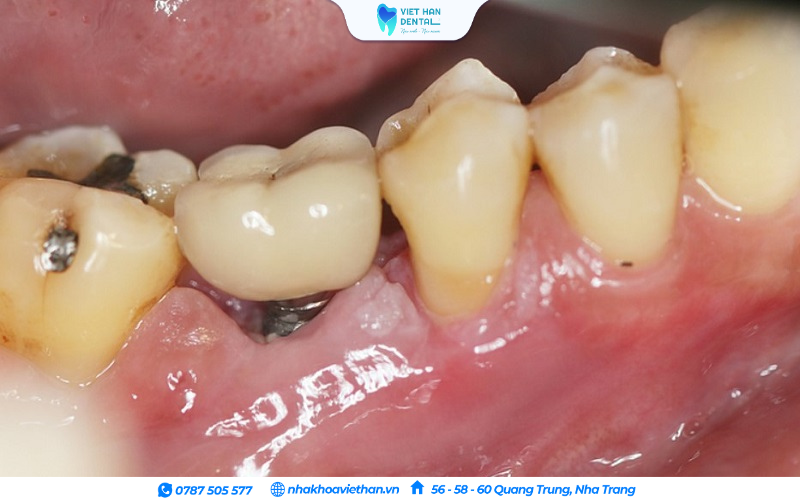
Patients should therefore prioritize genuine implant systems from established manufacturers and choose a reputable dental clinic with appropriate clinical expertise.
5.3 Incorrect Oral Care
After surgery, the implant area must be cleaned carefully according to the dentist’s instructions.
Improper oral hygiene or prolonged food accumulation around the implant site can encourage bacterial growth, potentially leading to inflammation, swelling, discharge, pain, and fever.
Maintaining appropriate oral hygiene is therefore an essential part of recovery after dental implant treatment.
5.4 Uncontrolled Medical or Oral Conditions
Certain systemic and oral conditions can interfere with healing and increase the risk of complications after implant surgery. These may include:
- Diabetes.
- Periodontal disease.
- Pulpal or dental infection.
- High blood pressure.
- Conditions that weaken the immune system or impair wound healing.
Patients with these conditions should have their health appropriately assessed and controlled before implant surgery to reduce risks and support treatment success.
6. Common Mistakes When Managing Fever at Home
When fever develops after implant surgery, many patients attempt to manage it at home. However, inappropriate measures may delay recovery or allow an underlying complication to become more serious.
Common mistakes to avoid include:
Combining Multiple Medications Without Professional Advice
Taking several pain relievers or fever-reducing medications at the same time may lead to overdose, liver or kidney damage, and the masking of important signs of infection.
Using Thick Blankets While Feverish
Heavy blankets prevent the body from releasing heat, potentially increasing body temperature and prolonging discomfort.
Ignoring Unusual Symptoms
Some patients assume that every fever is a normal postoperative reaction and do not return for an examination. This may allow a complication to progress unnoticed and affect the outcome of implant treatment.
7. Viet Han Dental Clinic – A Trusted Destination for Dental Implant Treatment in Nha Trang
Tooth loss affects more than appearance. It can reduce chewing efficiency, increase the risk of jawbone loss, and affect neighbouring teeth.
At Viet Han Dental Clinic, every patient receives a comprehensive examination and a personalized treatment plan designed to achieve effective, stable, and long-term restoration.
7.1 Comprehensive Examination and Assessment
Before implant placement, the dentist performs a comprehensive oral examination and evaluates jawbone density, bone volume, and relevant aspects of the patient’s general health.
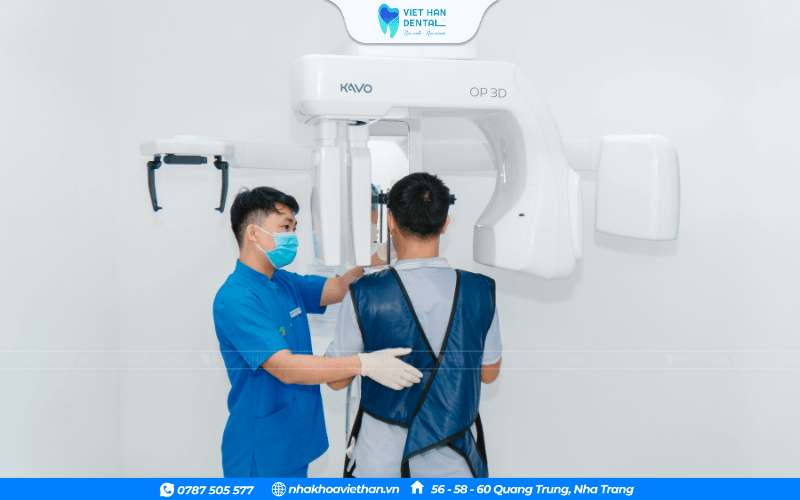
A 3D Cone Beam CT scan is used to assess the missing-tooth site, bone structure, and important anatomical areas. This information allows the dentist to develop an appropriate plan for each case.
7.2 Personalized Treatment Planning
Every patient has a different pattern of tooth loss and jawbone quality. The dental team at Viet Han Dental Clinic therefore develops an individualized plan, including implant selection, placement position, treatment timeline, and the final restoration.
This approach is intended to support osseointegration and provide a stable, long-term result.
7.3 Modern Technology and Equipment
Viet Han Dental Clinic invests in specialized implant technology, including 3D Cone Beam CT imaging, digital intraoral scanning, and CAD/CAM restoration design systems.
These technologies improve diagnostic accuracy, support treatment planning, and assist in producing well-fitting restorations.
7.4 A Safe Implant Treatment Process
Implant treatment is performed in a controlled, sterile clinical environment. Every stage—from surgical implant placement to the final dental restoration—is carefully monitored to minimize the risk of infection and other unwanted complications.
7.5 An Experienced Dental Team
Established in 2017, Viet Han Dental Clinic provides examinations and treatment performed directly by dentists experienced in implant dentistry and dental restoration.
With their clinical knowledge and practical experience, the dentists carefully monitor healing, implant integration, function, and the aesthetic quality of the final restoration.
7.6 Postoperative Monitoring and Care
After treatment, patients receive detailed guidance on cleaning the implant area, maintaining an appropriate diet, and attending scheduled follow-up appointments.
Regular monitoring allows the dentist to evaluate osseointegration, identify potential concerns at an early stage, and support the long-term effectiveness of treatment.
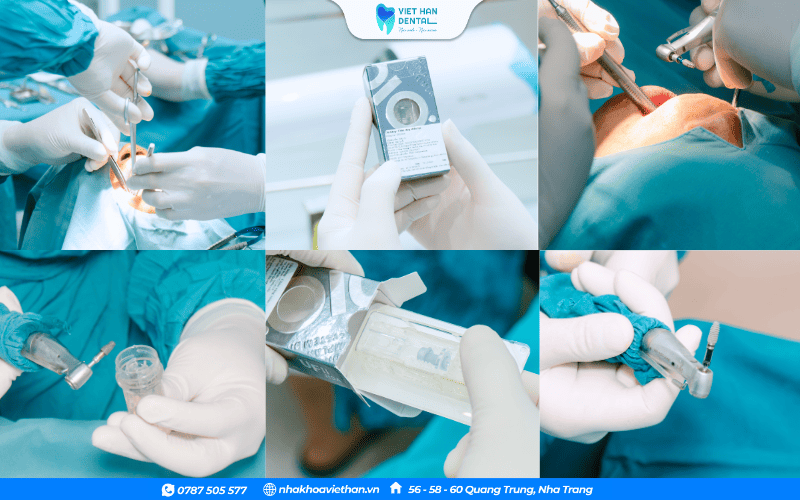
A mild fever after dental implant surgery is often a natural response and may improve within a few days with appropriate care. However, a persistent high fever or symptoms such as increasing pain, significant swelling, or pus discharge require prompt professional examination.
Careful health monitoring and proper postoperative care help support successful osseointegration and long-term implant outcomes. If you experience any unusual symptoms after dental implant treatment, contact Viet Han Dental Clinic for a timely examination and professional support.
Viet Han Dental Clinic
Team of Doctors 100% graduated from Ho Chi Minh City/Hue/Hanoi University of Medicine and Pharmacy
Address: 56-58-60 Quang Trung, Nha Trang, Khanh Hoa, Viet Nam
Hotline/ Whatsapp: 0787 505 577
Website: nhakhoaviethan.vn
Fanpage: Viet Han Dental Clinic
Instagram: viethandental
Youtube: Viet Han Dental
Group facebook: ĐỒNG NIỀNG VIỆT HÀN – VIET HAN BRACERS