


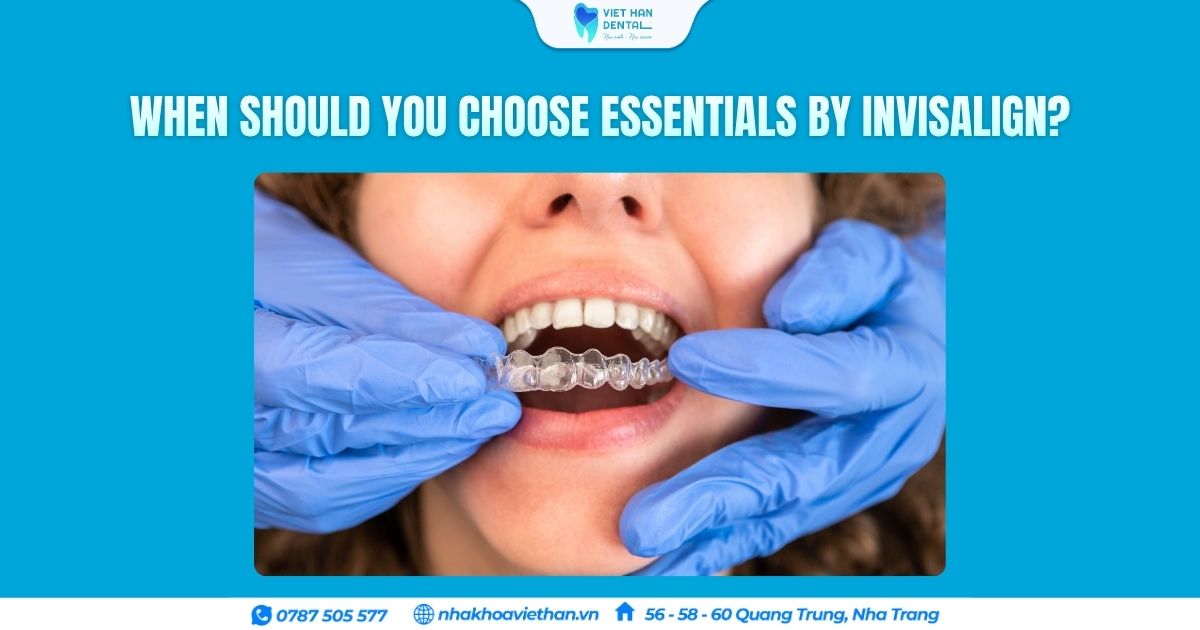
Among modern orthodontic treatments, clear aligners are becoming increasingly popular for their discreet appearance and convenience. Alongside premium aligner options, Essentials by Invisalign offers a more affordable solution for less complex cases. Who is this option suitable for, and how does it differ from other Invisalign treatments? Let’s explore with Viet Han Dental Clinic.
Nội dung
1. What Is Essentials by Invisalign?
Essentials by Invisalign is a clear aligner option developed by Align Technology for mild to moderate tooth misalignment. It offers an alternative for people who want to improve their smile with a shorter treatment timeline and a lower cost than comprehensive treatment plans. Key features include:
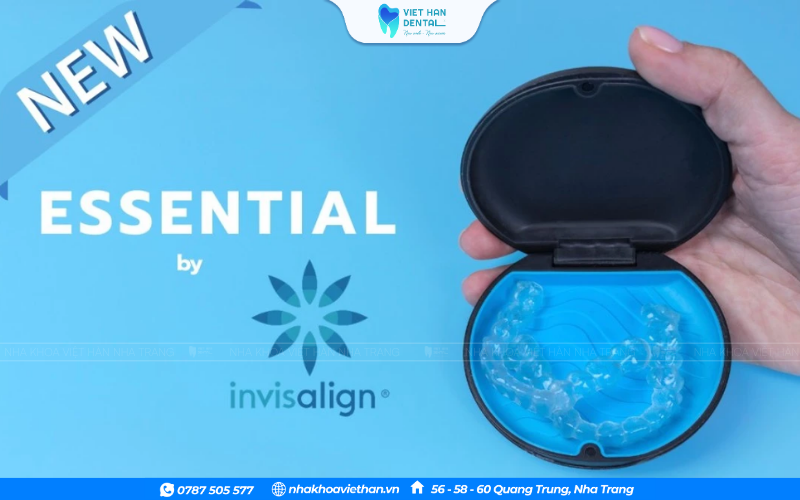
- EX30 material, which provides consistent elasticity and stiffness to help control tooth movement.
- A limited number of aligners, typically up to around 20, suitable for straightforward orthodontic cases.
- Basic refinement options during treatment.
This streamlined approach can help reduce treatment time and costs while delivering aesthetic improvements in suitable cases.
2. How Does Essentials Differ from Standard Invisalign?
When considering clear aligner treatment, many people wonder whether to choose Essentials or standard Invisalign. The two options differ in their materials, how they apply force, and the range of cases they can treat.
2.1. Materials and Force Delivery
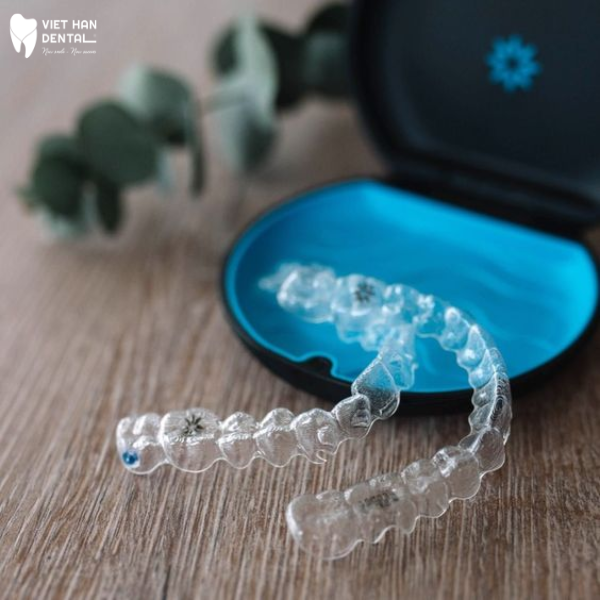
Essentials uses EX30 plastic, a relatively rigid material that applies noticeable force quickly. However, its more limited elasticity may result in more concentrated pressure, making tightness or discomfort more noticeable, particularly during the initial stages.
Standard Invisalign, meanwhile, uses proprietary SmartTrack material, which offers greater elasticity and a closer fit around the teeth. These properties allow force to be distributed more evenly and consistently across the dental arch, supporting gentle, controlled tooth movement and greater comfort throughout treatment.
2.2. Treatment Scope and Flexibility
Essentials is generally suitable for mild misalignment and less complex orthodontic needs. Its limited number of aligners also means fewer opportunities to make adjustments during treatment.
Standard Invisalign has a broader range of applications, from straightforward to complex cases. It offers several flexible treatment packages, allowing dentists to adjust the treatment plan when necessary to achieve the best possible outcome.
Standard Invisalign also supports advanced techniques, such as attachments—small tooth-coloured features bonded to the teeth that help the aligners apply force. These assist with more complex movements, including tooth rotation, repositioning and space closure, supporting more stable and comprehensive treatment outcomes.
Overall, Essentials is suited to basic orthodontic needs, while standard Invisalign offers greater flexibility for patients seeking more comprehensive correction and comfort throughout treatment.
3. When Should You Choose Essentials by Invisalign?
Not every case requires comprehensive orthodontic treatment. Essentials may be a suitable option for the following situations:
- Mild tooth misalignment: Minor crowding, small gaps or slight tooth rotation that does not significantly affect the bite may be effectively addressed with Essentials.
- Minor relapse after orthodontic treatment: Teeth can shift slightly after treatment if retainers are not worn as instructed. Essentials may help correct these changes without the need for extensive treatment.
- Tooth alignment before restorative treatment: For patients preparing for crowns, bridges or veneers, adjusting tooth positions beforehand can help achieve a more natural and harmonious aesthetic result.
4. Orthodontic Care at Viet Han Dental Clinic
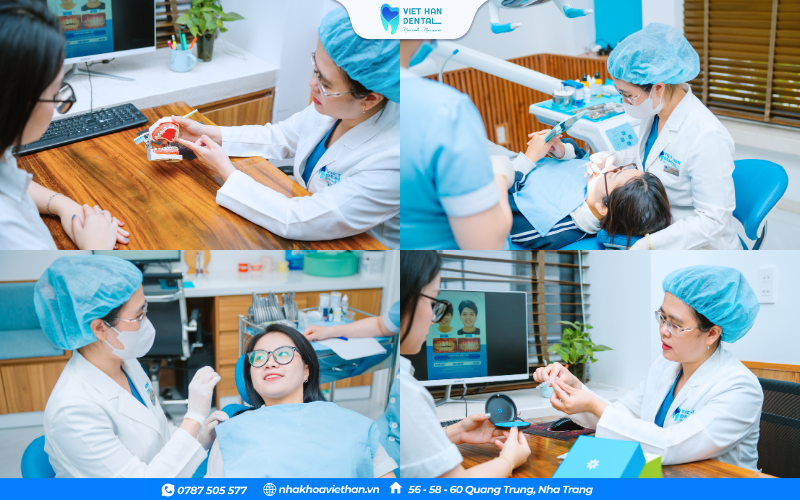
If you are considering orthodontic treatment, Viet Han Dental Clinic offers care focused on a clear treatment process tailored to your individual dental needs.
4.1. Thorough Examinations and Transparent Consultations
Before treatment begins, patients receive a comprehensive assessment of their oral health, including tooth alignment, bite and jaw structure. Based on these findings, the dentist recommends a suitable orthodontic approach and clearly explains the treatment process, estimated duration and important considerations.
4.2. Dentists with Orthodontic Expertise
The clinic’s dentists have professional training in dentistry and experience in monitoring and guiding tooth movement. This allows them to manage orthodontic forces and treatment progress appropriately, supporting safe and effective care.
4.3. Personalised Treatment Plans
Each patient receives an individual treatment plan based on their dental condition and aesthetic goals. Depending on the case, the dentist may recommend metal braces, ceramic braces or clear aligners to optimise treatment outcomes and comfort.
4.4. A Focus on Long-Term Stability
Orthodontic care involves more than straightening teeth; it also focuses on maintaining results after treatment. Patients receive guidance on retainer wear and proper oral hygiene to minimise the risk of relapse and help preserve their results over time.
Essentials by Invisalign can be a suitable choice for people with mild orthodontic needs who want to optimise treatment costs and time. However, an examination by a qualified dentist is essential to determine whether this option is appropriate for your teeth.
For personalised advice on your orthodontic options, visit Viet Han Dental Clinic for a free dental examination and guidance from our dentists.
Viet Han Dental Clinic
Team of Doctors 100% graduated from Ho Chi Minh City/Hue/Hanoi University of Medicine and Pharmacy
Address: 56-58-60 Quang Trung, Nha Trang, Khanh Hoa, Viet Nam
Hotline/ Whatsapp: 0787 505 577
Make an appointment: https://nhakhoaviethan.vn/en/contact/
Youtube: Viet Han Dental