



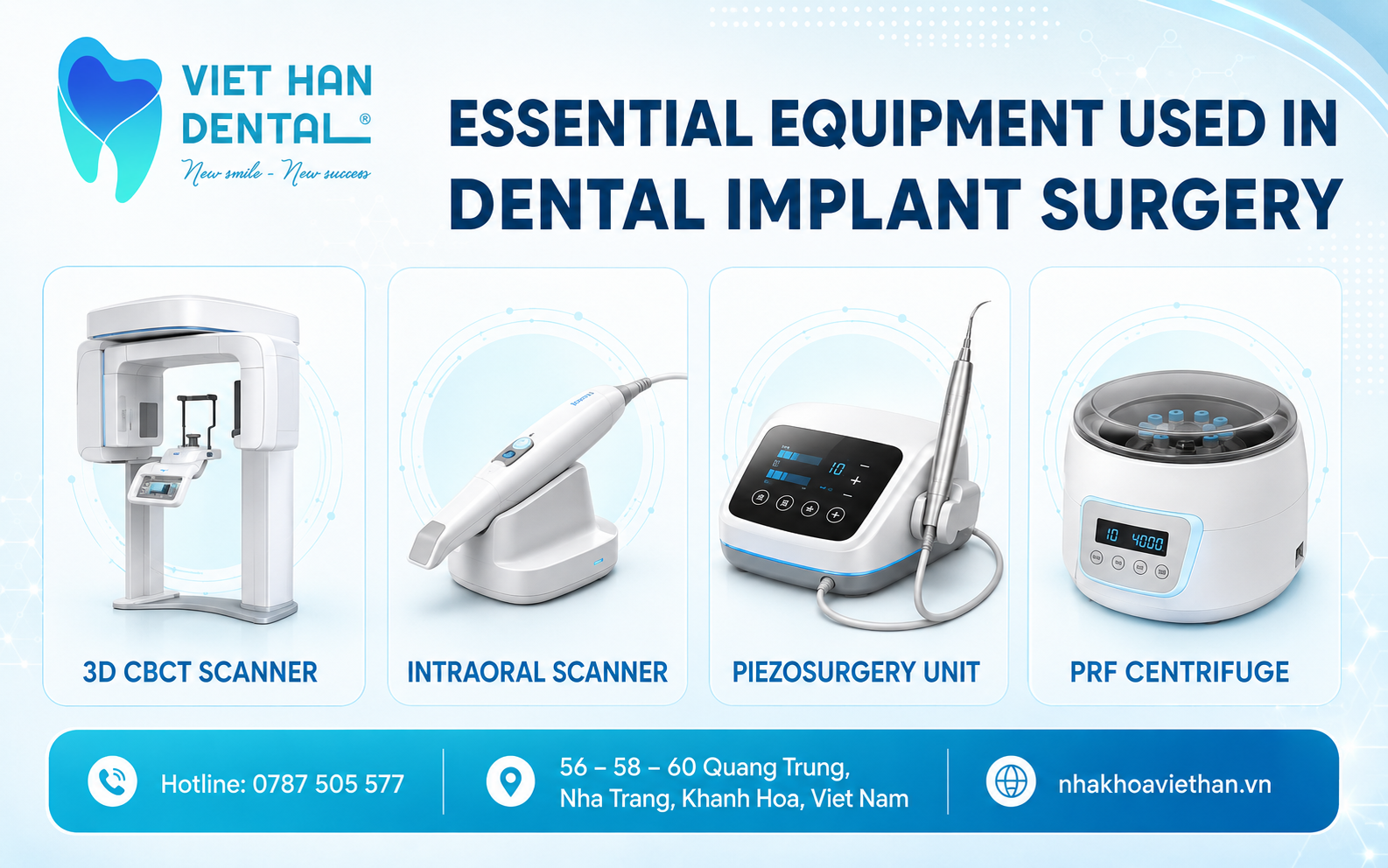
The success of dental implant treatment depends not only on the dentist’s expertise but also on the supporting equipment and technology. Modern systems improve treatment accuracy, minimize potential errors, and support successful osseointegration between the implant and jawbone.
What equipment is required for dental implant surgery? Let Viet Han Dental Clinic explain in detail in the article below.
Nội dung
- 1. What Is Dental Implant Treatment?
- 2. Who May Be Suitable for Dental Implant Treatment?
- 3. Key Benefits of Dental Implant Treatment
- 4. Why Is Titanium Used to Manufacture Dental Implants?
- 5. Essential Equipment Used in Dental Implant Surgery
- 6. Dental Implant Treatment Process
- 7. Dental Implant Treatment at Viet Han Dental Clinic
- Viet Han Dental Clinic
1. What Is Dental Implant Treatment?
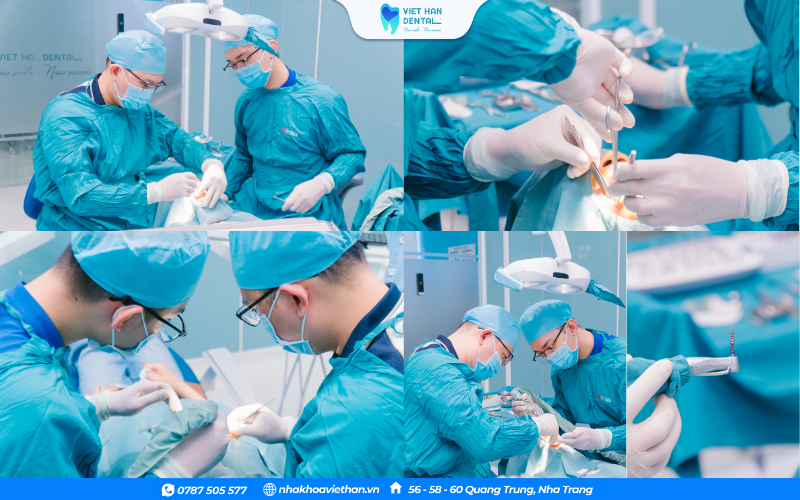
Dental implant treatment replaces a missing natural tooth root with a titanium implant placed directly into the jawbone. Once the implant has integrated firmly with the bone, the dentist attaches an abutment and a dental crown to complete the new tooth.
With a structure similar to that of a natural tooth, a dental implant can restore chewing function and aesthetics while helping maintain jawbone density following tooth loss.
A complete implant restoration consists of three main components:
Dental Implant
The implant functions as an artificial tooth root. It is commonly made from biocompatible titanium and features a threaded design that increases contact with the jawbone and supports osseointegration.
Abutment
The abutment connects the dental implant to the crown. It supports the restoration above and ensures a secure connection between the implant components.
Dental Crown
The crown is the visible part of the implant restoration. It is individually designed to resemble the colour, shape, and proportions of the patient’s natural teeth, creating a harmonious and natural-looking result.
2. Who May Be Suitable for Dental Implant Treatment?
Dental implants may be considered for several types of tooth loss, including:
- A single missing tooth when the patient does not want the adjacent teeth reduced for a traditional dental bridge.
- Multiple consecutive missing teeth that affect chewing function and appearance.
- Complete tooth loss requiring modern full-arch implant solutions.
- Tooth loss caused by decay, periodontal disease, or trauma when the natural tooth can no longer be preserved.
- Long-term tooth loss accompanied by jawbone loss, following bone grafting or other supportive treatment as recommended by the dentist.
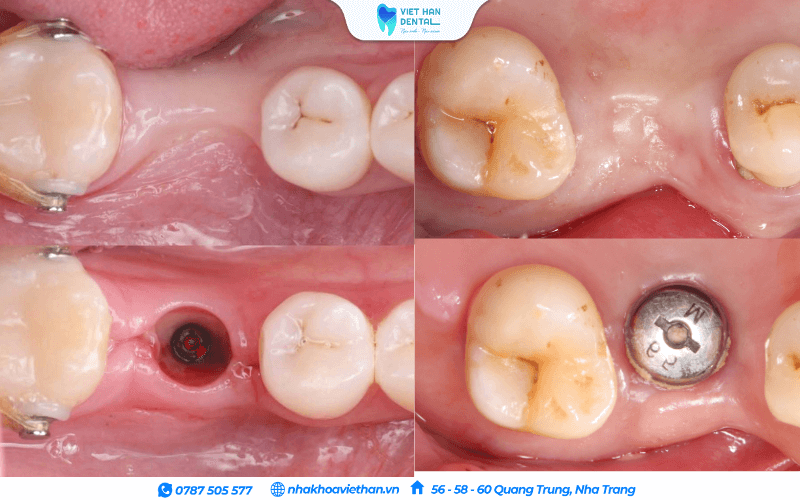
Thanks to their flexibility, durability, and ability to restore the function of missing teeth comprehensively, dental implants are considered one of the leading tooth-replacement solutions in modern dentistry. They can be used in cases ranging from a single missing tooth to complete tooth loss.
3. Key Benefits of Dental Implant Treatment
Dental implant treatment is regarded as an important advancement in modern restorative dentistry. In addition to restoring appearance, it can provide significant benefits for chewing function and long-term oral health.
Effective Restoration of Chewing Function
Once integrated with the jawbone, the implant provides a stable foundation for the dental crown. Patients can eat more comfortably without worrying about the restoration becoming loose or shifting.
Helping Limit Jawbone Loss
The implant replaces the missing tooth root and transmits chewing forces to the jawbone. This stimulation helps maintain bone activity and may reduce the risk of progressive bone loss and gum recession.
Natural-Looking Aesthetics
An implant crown can be designed to match the colour and shape of natural teeth. Replacing missing teeth also helps support facial structures and reduce the sunken appearance that may develop after prolonged tooth loss.
No Reduction of Adjacent Teeth
Unlike a traditional dental bridge, an implant does not require the neighbouring teeth to be reduced. This helps preserve healthy natural tooth structure and supports long-term oral health.
Long-Term Durability
With proper treatment, oral hygiene, and regular dental examinations, dental implants can remain functional for many years or even decades.
4. Why Is Titanium Used to Manufacture Dental Implants?
Titanium is widely used in medicine because of its high biocompatibility. When placed in the body, it has a low risk of rejection and can form a direct connection with bone tissue.
Titanium also offers several important benefits:
- High mechanical strength, allowing the implant to withstand chewing forces over an extended period.
- Excellent corrosion resistance, including within the moist and biologically active environment of the mouth.
- Strong load-bearing capacity that supports chewing function similar to that of natural teeth.
- Biocompatibility and suitability for long-term use.
- Effective support for osseointegration, contributing to implant stability and longevity.
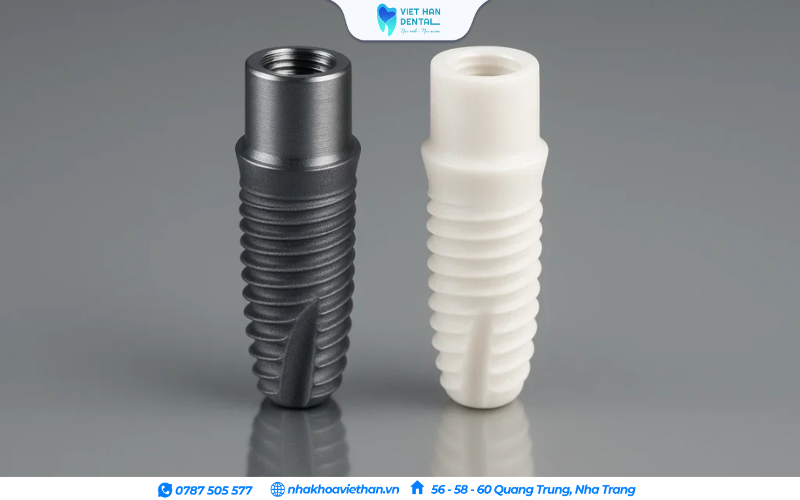
These properties have made titanium a standard material in modern dental implant manufacturing.
5. Essential Equipment Used in Dental Implant Surgery
To ensure that implant treatment is performed safely and accurately, dentists use a range of specialized equipment at different stages of the procedure.
5.1 Implant Surgical Motor
The implant surgical motor is one of the most important devices used during surgery. It is specifically designed to control drilling speed, torque, and irrigation.
These functions allow the dentist to prepare the implant site accurately while helping minimize heat generation and damage to the surrounding tissues.
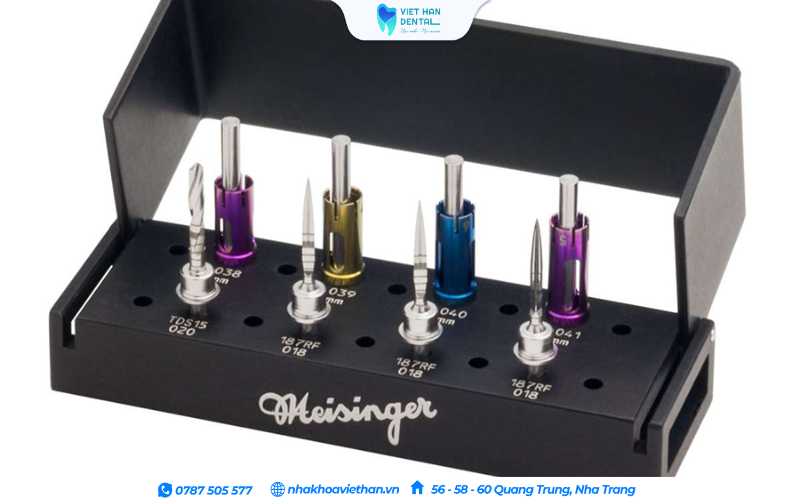
5.2 Implant Drill Kit
Each implant system has its own dimensions and design characteristics. Therefore, a corresponding surgical drill kit must be used.
The drills are used in a planned sequence to prepare an implant site with the appropriate diameter and depth, allowing the implant to be positioned according to the predetermined treatment plan.
5.3 Implant-Site Measuring Instruments
After preparing the implant site, the dentist uses specialized measuring instruments to check its depth, diameter, and angulation.
This verification step improves accuracy before implant placement and contributes to primary stability and successful osseointegration.
5.4 Healing Abutments and Cover Screws
Healing abutments and cover screws are used after implant placement to protect the surgical site and support the healing process.
Depending on the treatment protocol, these components may also assist in shaping the gum tissue and preparing it for the final restoration.
5.5 Implant Torque Wrench
An implant torque wrench helps the dentist place the implant into the prepared site and control the insertion torque accurately.
Achieving appropriate primary stability is an important factor that can influence osseointegration and the overall success of treatment.
5.6 Surgical Suction System
During implant surgery, the surgical suction system removes blood, irrigation fluid, saliva, and debris from the treatment area.
By keeping the surgical field clear, the system improves visibility and allows the dentist to perform the procedure more accurately and safely.
6. Dental Implant Treatment Process
Dental implant treatment is performed in carefully planned stages to promote accuracy, safety, and successful osseointegration. The treatment timeline may vary depending on each patient’s oral condition, but it generally includes the following steps:
Step 1: Examination and Treatment Planning
The dentist conducts a comprehensive oral examination, evaluates the patient’s jawbone density, and determines an appropriate implant restoration plan.
Step 2: Diagnostic Imaging and Data Collection
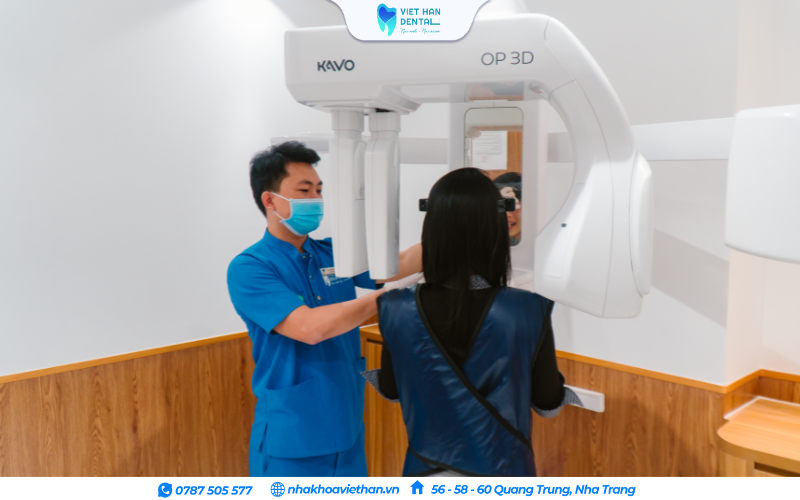
A Cone Beam CT scan is taken to assess the three-dimensional structure of the jawbone before implant placement.
Step 3: Implant Placement
The dentist surgically places the titanium implant into the missing-tooth site under strict sterile conditions.
Step 4: Osseointegration Period
The implant is given time to integrate with the jawbone. During this healing period, a temporary restoration may be provided where clinically appropriate to maintain appearance and basic function.
Step 5: Placement of the Final Crown
Once the implant has integrated successfully and is stable, the final dental crown is attached to restore chewing function and appearance.
7. Dental Implant Treatment at Viet Han Dental Clinic
Dental implant treatment is chosen by many patients because it can restore chewing function and aesthetics in a way that closely resembles natural teeth.
To support successful treatment outcomes, Viet Han Dental Clinic invests in an experienced dental team, modern technology, and a structured care process throughout every stage of treatment.
7.1 Modern Equipment and Technology
Viet Han Dental Clinic is equipped with specialized systems for dental implant treatment, including 3D Cone Beam CT imaging, a comprehensive sterilization system, an implant surgical motor, and dedicated surgical instruments.
These technologies help dentists assess the jawbone accurately and perform treatment more efficiently.
7.2 Experienced Dental Implant Team
Dentists at Viet Han Dental Clinic have received advanced training in implant dentistry at leading medical and dental universities in Vietnam and regularly update their knowledge of modern techniques.
With experience in managing tooth-replacement cases ranging from straightforward to complex, the dentists develop an appropriate treatment plan for each patient.
7.3 Personalized Treatment Planning
Every case of tooth loss is different in terms of the number of missing teeth, jawbone quality, oral health, and restorative needs.
For this reason, Viet Han Dental Clinic creates an individualized plan for each patient, including implant-system selection, treatment timeline, and the final restoration.
Personalized treatment planning helps optimize restorative outcomes while taking each patient’s health, circumstances, expectations, and budget into consideration.
7.4 Follow-Up and Care After Implant Placement
After implant surgery, patients receive detailed instructions regarding diet, oral hygiene, and care of the surgical site.
The dentist also schedules follow-up appointments to monitor healing and osseointegration and to identify and manage any unusual signs promptly.
Careful postoperative monitoring supports implant success, stable chewing function, and the long-term durability of the restoration.
Dental implant treatment is a modern solution for replacing missing teeth, offering effective restoration of chewing function and aesthetics. In addition to the dentist’s expertise, specialized equipment plays an important role in improving treatment accuracy, safety, and overall outcomes.
If you are considering dental implant treatment, visit Viet Han Dental Clinic for a complimentary consultation, diagnostic imaging to assess your jawbone, and a personalized treatment plan developed by our experienced dental team.
Viet Han Dental Clinic
Team of Doctors 100% graduated from Ho Chi Minh City/Hue/Hanoi University of Medicine and Pharmacy
Address: 56-58-60 Quang Trung, Nha Trang, Khanh Hoa, Viet Nam
Hotline/ Whatsapp: 0787 505 577
Website: nhakhoaviethan.vn
Fanpage: Viet Han Dental Clinic
Instagram: viethandental
Youtube: Viet Han Dental
Group facebook: ĐỒNG NIỀNG VIỆT HÀN – VIET HAN BRACERS