



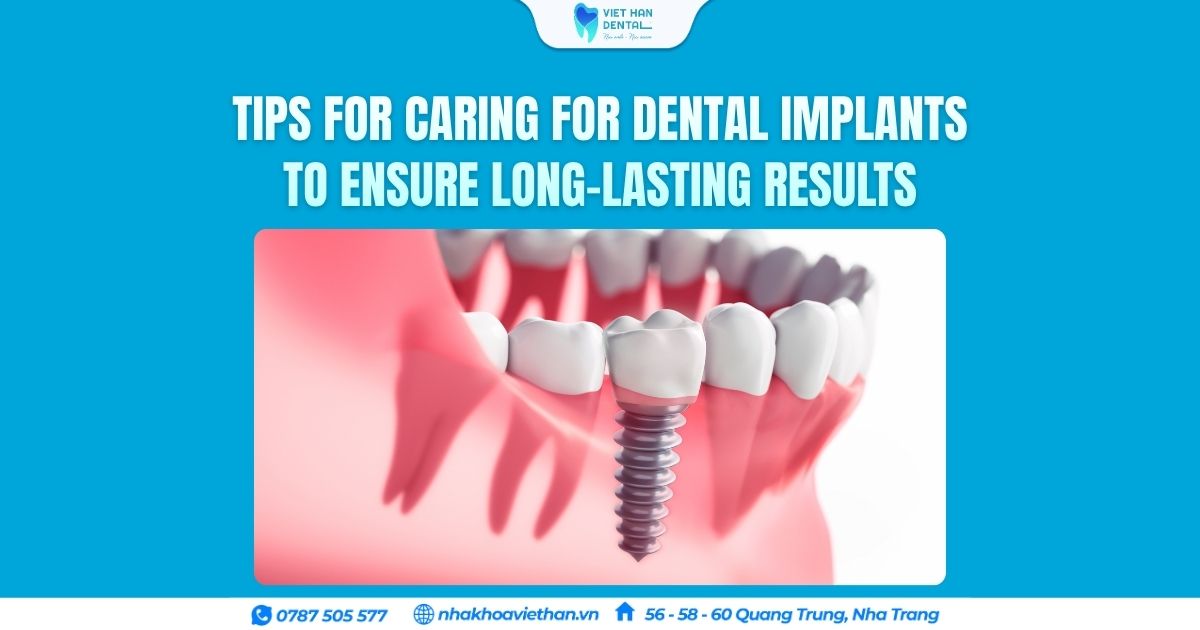
Dental implants are a long-term solution for missing teeth. They help restore chewing function, smile aesthetics, and confidence. However, even high-quality implants need proper care to stay healthy for many years.
At Viet Han Dental Clinic, we guide every patient on how to care dental implants correctly after surgery and during long-term maintenance.
Nội dung
- Why Dental Implant Care Is Important
- The First 24–48 Hours: Protect the Surgical Area
- Daily Hygiene to Care Dental Implants
- Diet Tips After Dental Implant Surgery
- Lifestyle Habits That Protect Dental Implants
- Long-Term Implant Maintenance
- Wear a Nightguard If You Grind Your Teeth
- Warning Signs You Should Not Ignore
- Dental Implant Care at Viet Han Dental Clinic
- Final Advice
- FAQs About How to Care Dental Implants
- Viet Han Dental Clinic
Why Dental Implant Care Is Important
Dental implants cannot get cavities like natural teeth. However, the gum and bone around the implant can still become infected if plaque builds up.
Poor hygiene may lead to peri-implantitis, a gum infection around the implant that can cause bone loss, gum swelling, and even implant failure.
Proper dental implant care helps protect:
- The implant post
- The gum tissue
- The jawbone
- The implant crown
- Long-term chewing stability
The First 24–48 Hours: Protect the Surgical Area
The first 24–48 hours after implant surgery are very important. This is the protection phase, when your body begins healing.
1. Keep the Blood Clot Stable
Bite firmly on the sterile gauze for 30–45 minutes after surgery.
Avoid:
- Spitting strongly
- Rinsing vigorously
- Using a straw
- Touching the wound with your tongue or fingers
These actions may dislodge the blood clot and cause bleeding.
2. Reduce Swelling
Apply an ice pack to your cheek near the surgical area.
Use the method:
- 15 minutes on
- 15 minutes off
- Repeat during the first 24 hours
When resting, keep your head slightly elevated with extra pillows.
3. Avoid Heat and Heavy Activity
Do not consume hot food or drinks during the first day. Also avoid hot showers, saunas, exercise, and long walks, as they may increase bleeding and swelling.
Daily Hygiene to Care Dental Implants
Good daily hygiene is the key to long-term implant success.
1. Use a Soft Toothbrush
Brush twice a day with a soft-bristled toothbrush or a gentle electric toothbrush. Clean around the implant crown carefully without applying too much pressure.
2. Choose Non-Abrasive Toothpaste
Avoid whitening toothpaste, charcoal toothpaste, baking soda, or harsh abrasive products. These may scratch or wear down the surface of the crown.
3. Floss Around the Implant
Use implant floss, interdental brushes, or a water flosser on a low-pressure setting to clean around the gumline.
This helps remove hidden plaque and food debris that a toothbrush may miss.
4. Use Alcohol-Free Mouthwash
An alcohol-free antibacterial mouthwash can help reduce bacteria without irritating the gums.
Diet Tips After Dental Implant Surgery
What you eat can affect healing and implant stability.

Recommended Foods
During the first few days, choose soft, cool, or slightly warm foods such as:
- Yogurt
- Smoothies without a straw
- Mashed potatoes
- Scrambled eggs
- Soft rice
- Soup
- Porridge
- Steamed fish
These foods are gentle and easy to chew.
Foods to Avoid
Avoid foods that are:
- Hard
- Crunchy
- Sticky
- Spicy
- Too hot
- Too cold
- High in sugar
Do not chew ice, hard candy, bones, or use your implant crown to bite hard objects.
Lifestyle Habits That Protect Dental Implants
1. Stop Smoking
Smoking reduces blood flow to the gums and jawbone. This slows healing and increases the risk of implant failure.
For best results, patients should avoid smoking completely during the healing phase and reduce or stop smoking long term.
2. Limit Alcohol
Alcohol can delay the body’s natural healing process. It may also interfere with medication after surgery.
3. Control Sugar Intake
High sugar intake increases plaque buildup and gum inflammation, which may affect the tissue around the implant.
Long-Term Implant Maintenance
Dental implants require regular professional care, just like natural teeth.
At Viet Han Dental Clinic, we recommend implant patients visit the dentist every 6 months for:
- Professional implant cleaning
- Gum health evaluation
- Bite adjustment
- Crown and screw check
- X-ray to monitor bone level
- Early detection of peri-implantitis
For patients with diabetes, smoking habits, gum disease, or teeth grinding, check-ups every 3–4 months may be recommended.
Wear a Nightguard If You Grind Your Teeth
Teeth grinding can place excessive pressure on dental implants. Unlike natural teeth, implants do not have ligaments to absorb force.
If you grind or clench your teeth at night, your dentist may recommend a custom nightguard to protect the implant crown and reduce mechanical stress.
Warning Signs You Should Not Ignore
Contact your dentist if you notice:
- Swollen or bleeding gums
- Pain around the implant
- Bad breath that does not improve
- Loose implant crown
- Pus around the implant
- Difficulty chewing
- Gum recession around the implant
Early treatment can prevent serious complications.
Dental Implant Care at Viet Han Dental Clinic
At Viet Han Dental Clinic in Nha Trang, we focus on both implant placement and long-term implant maintenance.
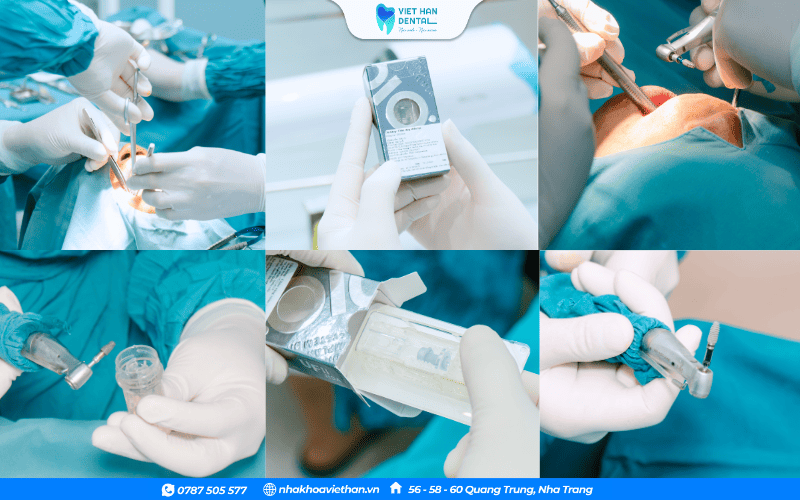
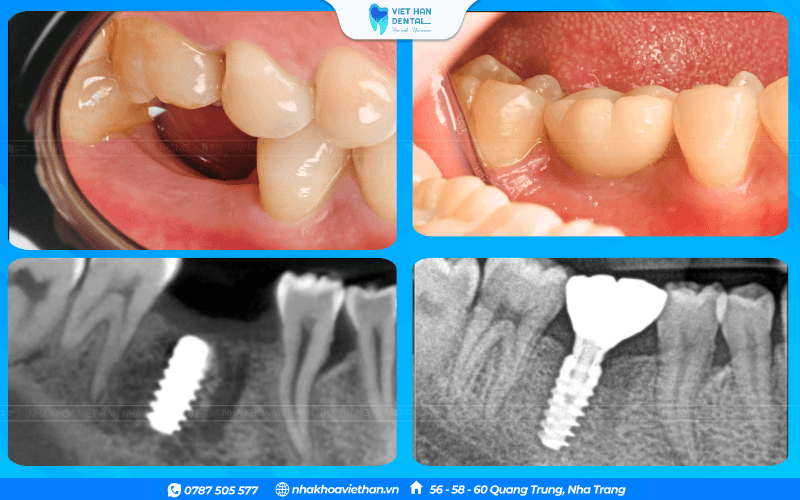
Our implant care includes:
- 3D Cone Beam CT scan
- Personalized implant planning
- High-quality implant systems
- Clear post-surgery instructions
- Professional follow-up care
- Implant maintenance guidance
- Support for local and international patients
Our goal is to help your dental implants remain stable, healthy, and natural-looking for many years.
Final Advice
Learning how to care dental implants properly is essential for long-lasting results. The most important steps are simple: keep your mouth clean, avoid smoking, eat carefully after surgery, protect your implant from heavy bite force, and visit your dentist regularly.
With the right daily care and professional support from Viet Han Dental Clinic, dental implants can become a strong and lasting investment in your smile, health, and quality of life.
FAQs About How to Care Dental Implants
How often should I clean dental implants?
You should brush at least twice a day and clean around implants daily with floss, interdental brushes, or a water flosser.
Can dental implants get infected?
Yes. The implant itself cannot decay, but the gum and bone around it can become infected due to plaque buildup.
Can I use a water flosser for dental implants?
Yes. A water flosser can help clean around implants, especially near the gumline. Use a gentle or low-pressure setting.
What foods should I avoid after implant surgery?
Avoid hard, crunchy, spicy, sticky, very hot, or very cold foods during the early healing period.
How often should I visit the dentist after implants?
Most patients should visit every 6 months. High-risk patients may need check-ups every 3–4 months.
Is smoking bad for dental implants?
Yes. Smoking reduces blood flow, slows healing, and increases the risk of implant failure.
Viet Han Dental Clinic
Team of Doctors 100% graduated from Ho Chi Minh City/Hue/Hanoi University of Medicine and Pharmacy
Address: 56-58-60 Quang Trung, Nha Trang, Khanh Hoa, Viet Nam
Hotline/ Whatsapp: 0787 505 577
Website: nhakhoaviethan.vn
Fanpage: Viet Han Dental Clinic
Instagram: viethandental
Youtube: Viet Han Dental
Group facebook: ĐỒNG NIỀNG VIỆT HÀN – VIET HAN BRACERS