


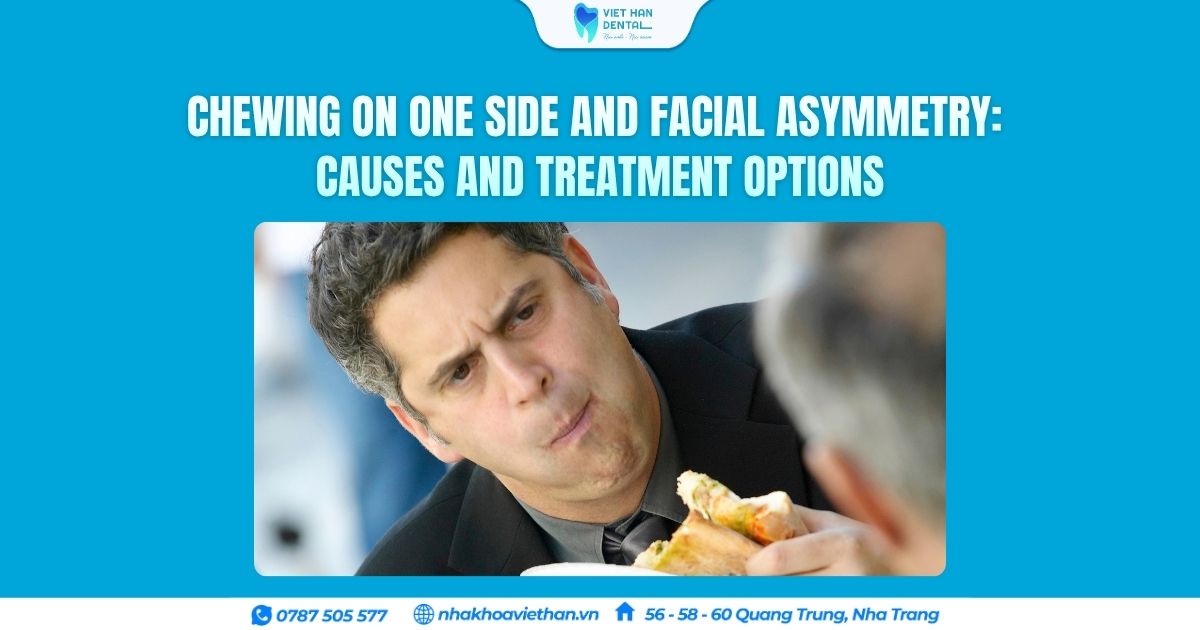
Do you usually chew on the left or right side of your mouth? This habit may develop without you noticing, especially when a tooth hurts, a tooth is missing, or one side feels more comfortable.
However, an uneven face does not automatically mean that one-sided chewing is the cause. Facial asymmetry can involve the teeth, jaw position, muscles, bones or soft tissues. Understanding the underlying problem is the first step towards choosing appropriate treatment.
In this article, Viet Han Dental Clinic explains why people favour one side when chewing, what to look out for, and which treatment options may help.
Nội dung
- 1. Why Do People Chew on One Side?
- 2. Can Chewing on One Side Cause an Uneven Face?
- 3. What Problems Should You Watch For?
- 4. What Can You Do at Home?
- 5. Professional Treatment: Match the Solution to the Cause
- 6. When Should You See a Dentist?
- 7. Orthodontic Assessment at Viet Han Dental Clinic
- 8. Frequently Asked Questions
- Viet Han Dental Clinic
1. Why Do People Chew on One Side?
1.1. A Long-Standing Chewing Preference
Some people develop a preferred chewing side early in life and continue using it without thinking. However, if a child consistently avoids one side, it is worth checking for tooth decay, discomfort or a bite problem rather than assuming it is simply a habit.
1.2. Missing Teeth
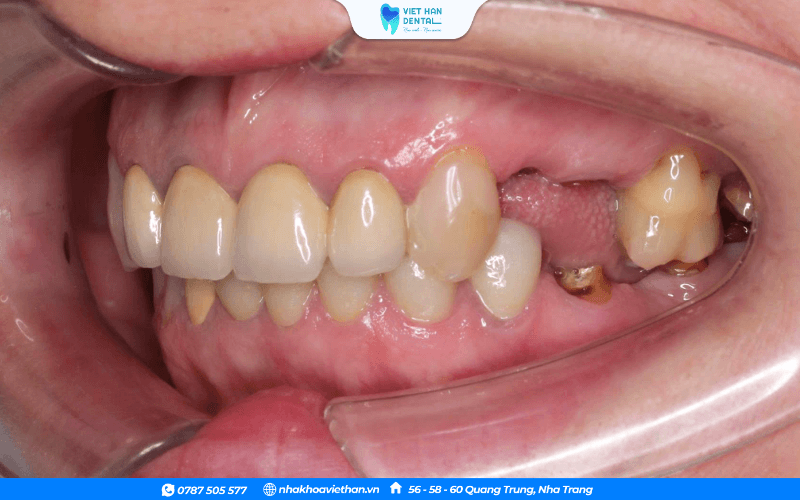
Missing back teeth can make chewing less effective or comfortable on the affected side. As a result, people may rely on the opposite side during meals.
A dental assessment can identify whether replacing missing teeth would help restore more balanced chewing.
1.3. Tooth or Gum Problems
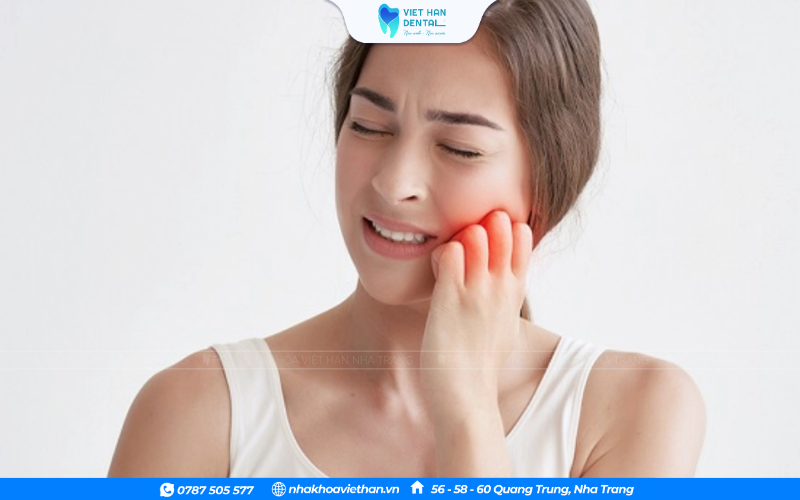
Tooth decay, a cracked tooth, inflamed dental pulp or gum disease may make biting uncomfortable. Avoiding the painful side can provide temporary relief, but it does not resolve the cause.
If you have toothache, swelling or pain when biting, arrange a dental examination before trying to change your chewing pattern.
1.4. Bite Discrepancies or Problems with Dental Restorations
An uneven bite or a filling, crown or denture that feels uncomfortable may make one side easier to use.
Tell your dentist if this preference started after recent dental treatment, or if your teeth no longer seem to meet as they did before.
2. Can Chewing on One Side Cause an Uneven Face?
One-sided chewing may be part of the picture, but it should not be assumed to be the only cause of facial asymmetry.
Facial differences can reflect inherited features, variations in growth, previous injuries or a shift in jaw position when the teeth come together. Assessment usually involves a medical and dental history, examination and, where appropriate, imaging.
The relationship may also work in the opposite direction: an existing dental or jaw problem can make someone favour one side when eating.
For this reason, neither the larger-looking nor the smaller-looking side of your face reliably tells you which side you should chew on. A treatment plan should be based on an examination rather than appearance alone.
3. What Problems Should You Watch For?
3.1. Persistent Discomfort During Meals
If you repeatedly avoid one side, an underlying tooth, gum or restoration problem may remain untreated. Take note of whether the discomfort occurs with pressure, hot or cold foods, or particular textures.
3.2. Uneven Tooth Wear
Uneven wear or chipped teeth should be assessed. Your dentist can check how your teeth meet and whether other factors, such as clenching or grinding, may be involved.
3.3. Jaw Pain or Restricted Movement
Pain around the jaw joint, stiffness, locking or painful clicking may indicate a temporomandibular disorder (TMD). These conditions have multiple possible contributors; one-sided chewing alone does not establish the diagnosis.
Occasional clicking without pain or restricted movement is common and generally does not require treatment by itself.
3.4. Difficulty Eating a Varied Diet
If chewing becomes uncomfortable, you may start avoiding certain foods. This is a reason to have the problem assessed, particularly if it affects your ability to eat normally.
4. What Can You Do at Home?
Home care should focus on comfort and avoiding unnecessary strain. It cannot reliably correct an underlying skeletal difference.
4.1. Address Pain Before Changing Your Chewing Pattern
Do not force yourself to chew on a painful tooth or an uncomfortable side. First, find out why you are avoiding it.
Once the underlying problem has been addressed, ask your dentist how to return to comfortable chewing across both sides. Avoid replacing one one-sided habit with another in an attempt to “balance” your face.
4.2. Reduce Excessive Jaw Loading
If your jaw feels sore, softer foods for a short period may help. Avoid chewing gum, deliberately clenching your teeth or using hard foods as a jaw workout. These measures are intended to reduce discomfort, not reshape the face.
4.3. Use Jaw Exercises Only When Appropriate
A dentist or physiotherapist may recommend gentle exercises for a diagnosed jaw problem. The movements should suit your symptoms; stop if they cause pain or locking.
Exercises may support comfort and movement, but should not be presented as a guaranteed way to restore facial symmetry.
4.4. Do Not Rely on Mewing to Correct Facial Asymmetry
Mewing involves changing tongue posture in an attempt to reshape the jawline. There is no reliable evidence that it corrects facial asymmetry or predictably remodels an adult jaw.
The American Association of Orthodontists advises against attempting to move teeth or realign the jaws without professional supervision. Forceful tongue pressure and online jaw-shaping routines are not substitutes for a dental assessment.
4.5. Maintain Oral Hygiene on Both Sides
Brush twice daily with fluoride toothpaste and clean between your teeth every day. Regular dental check-ups can help identify problems before pain begins to affect the way you eat.
5. Professional Treatment: Match the Solution to the Cause
Treatment for an uneven face and one-sided chewing should begin with a diagnosis. Not every patient needs braces, and not every facial difference needs treatment.
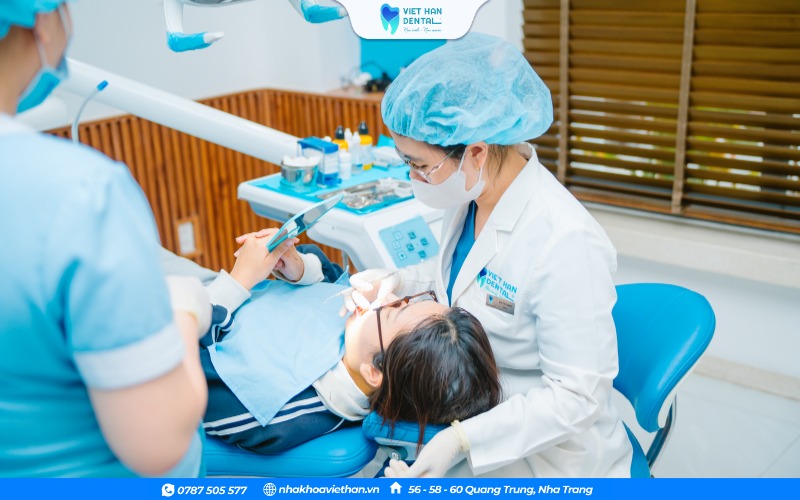
5.1. Treat Painful Teeth and Gum Conditions
If discomfort is driving the habit, treating the affected tooth or gums is the priority. Depending on the diagnosis, this may involve a filling, root canal treatment, periodontal care or attention to an existing restoration.
The initial goal is to make eating comfortable again.
5.2. Assess Options for Replacing Missing Teeth
Where missing teeth limit chewing, your dentist may discuss implants, bridges or removable dentures.
The appropriate choice depends on the remaining teeth, gum and bone health, bite, medical history and budget. Restoring chewing support does not automatically guarantee a change in facial symmetry.
5.3. Orthodontic Treatment for Tooth and Bite Problems
Braces or clear aligners may be appropriate when tooth position or a bite discrepancy contributes to the problem. In selected cases, correcting the bite can also improve the way the jaws meet.
However, orthodontics alone cannot correct every form of facial asymmetry. The distinction between a dental problem and a skeletal problem is important when setting realistic expectations.
5.4. Conservative Care for Jaw Joint and Muscle Problems
When TMD is diagnosed, care usually begins with conservative options. These may include habit changes, clinician-guided physiotherapy and other treatments selected for the individual.
Braces should not be prescribed solely as a guaranteed cure for TMD.
5.5. Corrective Jaw Surgery for Selected Skeletal Cases
For significant jawbone asymmetry, an orthodontist and an oral and maxillofacial surgeon may assess whether corrective jaw surgery is appropriate.
This treatment repositions the jaws and may be combined with orthodontics. It requires specialist planning and a discussion of the likely benefits, risks, recovery and limitations. It is not a routine treatment for a simple chewing preference.
6. When Should You See a Dentist?
Arrange an assessment if you:
- Consistently avoid chewing on one side.
- Have pain when biting or persistent tooth sensitivity.
- Have missing teeth that affect eating.
- Notice a change in your bite or increasing facial asymmetry.
- Experience painful jaw clicking, locking or difficulty opening your mouth.
Seek urgent dental care for facial swelling, fever or severe toothache. Difficulty breathing or swallowing requires emergency medical attention.
Sudden facial drooping—especially with arm weakness or speech difficulty—requires immediate emergency assessment. Do not attribute a sudden change to a chewing habit.
7. Orthodontic Assessment at Viet Han Dental Clinic
At Viet Han Dental Clinic in Nha Trang, assessment begins with understanding your symptoms, chewing habits and concerns about your smile or facial balance.
7.1. A Detailed Examination
The dentist evaluates your teeth, gums, bite and jaw movement to identify why you favour one side and whether orthodontic treatment is appropriate.
7.2. Imaging When Clinically Indicated
Digital X-rays and, in selected cases, Cone Beam CT may support diagnosis and treatment planning. The need for imaging depends on the findings of your examination; a 3D scan is not necessary for every patient.
7.3. A Personalised Treatment Plan
Depending on the diagnosis, care may involve treating dental disease, restoring missing teeth, orthodontics or referral for specialist assessment.
For patients who need orthodontics, available options include metal braces, ceramic braces and clear aligners. Recommendations take account of the bite problem, oral health, aesthetic preferences and budget.
7.4. Follow-Up and Long-Term Care
Regular reviews allow the dentist to monitor treatment progress and chewing comfort. After orthodontic treatment, patients receive advice on retainers and oral hygiene to help maintain tooth alignment.
8. Frequently Asked Questions
Will chewing on the opposite side make my face even?
Not necessarily. Appearance alone cannot identify the cause of asymmetry, and deliberately overusing the opposite side is not a reliable treatment. Have any pain, missing teeth or bite problems assessed first.

How long does it take to improve facial asymmetry?
There is no single timeline. It depends on whether the concern involves tooth position, jaw function, muscles, bone structure or several factors. Your clinician can discuss expected changes after establishing the diagnosis.
Can braces completely correct an uneven face?
Braces can address tooth alignment and certain bite-related problems. They cannot guarantee complete facial symmetry, particularly when the main difference involves jawbones or soft tissues.
Can a missing tooth explain why I chew on one side?
Yes, missing teeth may make chewing on that side less comfortable or effective. A dentist can assess whether tooth replacement would improve function and which option is suitable.
Should I try mewing before seeing a dentist?
Mewing is not an evidence-based treatment for facial asymmetry. If you are concerned about your bite or facial balance, a professional assessment is more useful than attempting to reshape your jaw yourself.
Chewing on one side is a reason to look at how comfortably your teeth and jaws function. Identifying the cause helps you choose care that supports both your oral health and realistic aesthetic goals.
Concerned about one-sided chewing, an uneven bite or facial asymmetry? Contact Viet Han Dental Clinic on Hotline/WhatsApp +84 787 505 577 to arrange an examination and discuss your treatment options.
Viet Han Dental Clinic
Team of Doctors 100% graduated from Ho Chi Minh City/Hue/Hanoi University of Medicine and Pharmacy
Address: 56-58-60 Quang Trung, Nha Trang, Khanh Hoa, Viet Nam
Hotline/ Whatsapp: 0787 505 577
Make an appointment: https://nhakhoaviethan.vn/en/contact/
Youtube: Viet Han Dental